
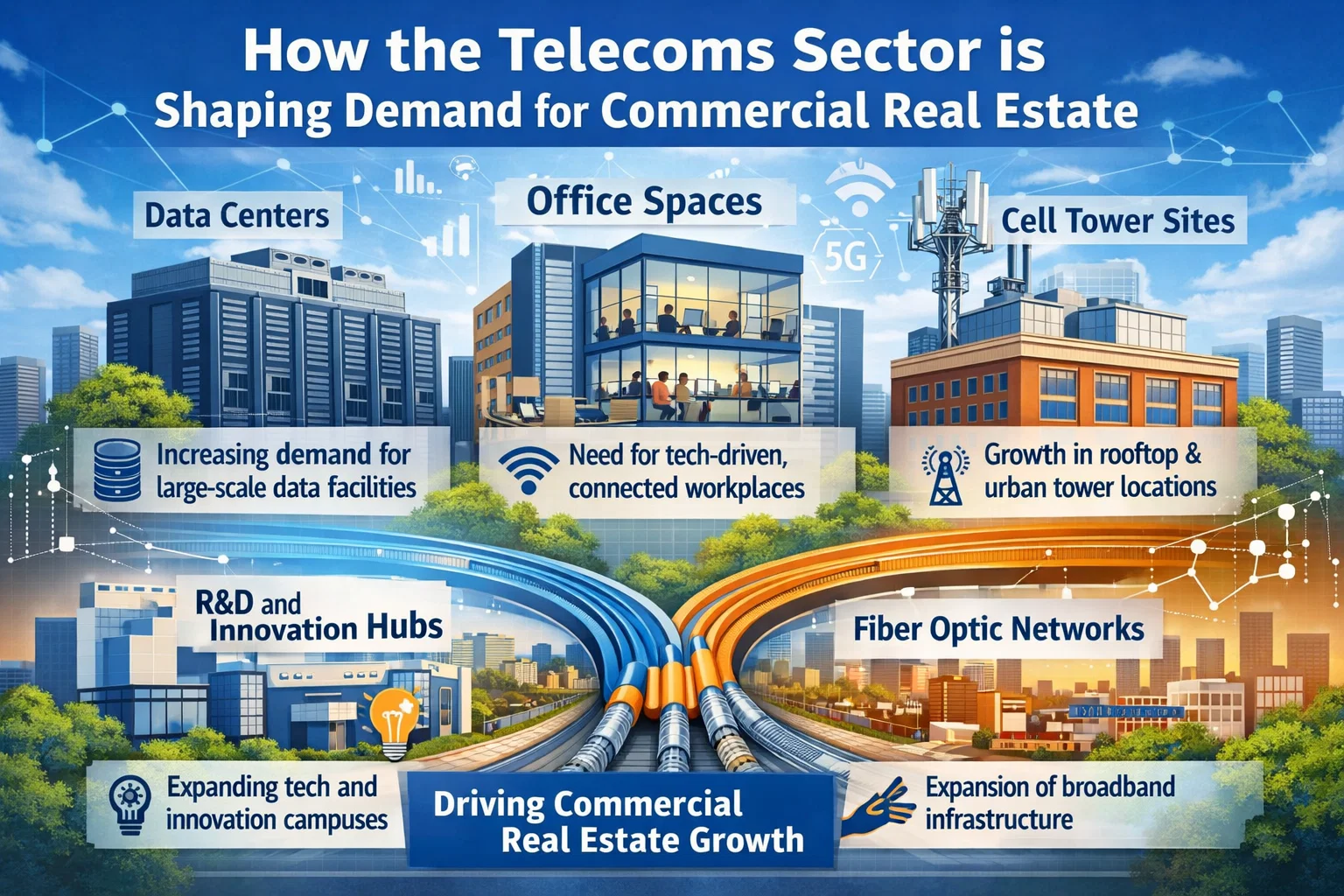
The telecoms sector is playing an increasingly influential role in shaping demand across the UK’s commercial real estate market. As connectivity becomes essential to both businesses and everyday life, the infrastructure required to support it is rapidly expanding. From 5G networks to data centres, this growth is creating new opportunities and challenges for property owners, investors, and developers.
One of the most significant drivers of change is the rollout of 5G technology. Faster speeds and lower latency are transforming how businesses operate, enabling everything from remote working to advanced digital services. To support this, telecoms providers require a dense network of infrastructure, including masts, small cells, and rooftop installations. As a result, commercial properties in urban areas are increasingly being evaluated not just for their traditional use, but also for their potential to host telecoms equipment.
Rooftop space in particular has become highly valuable. Office buildings, retail centres, and mixed-use developments are now being sought after for their ability to accommodate telecoms installations. For landlords, this presents an additional income stream through lease agreements with network operators. In many cases, these agreements can provide long-term, stable revenue, enhancing the overall value of the property.
Beyond rooftops, the demand for land suitable for telecoms infrastructure is also rising. Greenfield and brownfield sites are being repurposed to house masts and other essential equipment. Industrial estates and logistics parks, which often offer the space and accessibility required, are especially attractive to telecoms providers. This has led to increased competition for certain types of land, influencing both pricing and development strategies.
Another key area of growth is data centres. As digital consumption continues to surge, the need for secure, scalable data storage has never been greater. Data centres are now a critical component of the commercial property landscape, often requiring significant investment and specialised facilities. Locations with strong connectivity, reliable power supply, and proximity to major urban hubs are particularly in demand. This is driving new development in regions that can meet these criteria, reshaping regional property markets in the process.
The rise of flexible working and digital-first businesses has also contributed to shifting demand patterns. Companies are prioritising connectivity and technological infrastructure when selecting office space. High-speed internet, resilience, and future-proofing are no longer optional they are essential. As a result, buildings that can support advanced telecoms capabilities are commanding greater interest and, in many cases, higher rents.
However, this evolving landscape is not without its complexities. Planning regulations, lease negotiations, and legal frameworks such as the Electronic Communications Code can present challenges for property owners. Understanding the rights and responsibilities associated with telecoms agreements is crucial to maximising value while avoiding potential disputes. Professional advice is often essential to navigate these intricacies effectively.
Sustainability is another important consideration. As the demand for telecoms infrastructure grows, so too does the need to balance development with environmental responsibility. Energy-efficient data centres, careful site selection, and the integration of infrastructure into existing buildings are all becoming key priorities. Developers and investors who can align telecoms opportunities with sustainability goals are likely to be well-positioned for long-term success.
Looking ahead, the relationship between telecoms and commercial real estate is set to deepen further. The continued evolution of technologies such as the Internet of Things (IoT), artificial intelligence, and smart cities will only increase the need for robust and widespread connectivity. This, in turn, will drive ongoing demand for property that can support these advancements.
In conclusion, the telecoms-driven transformation of commercial real estate is creating both opportunities and challenges. For those willing to adapt and embrace change, the potential rewards are significant. Whether through new income streams, enhanced property value, or strategic development, the influence of telecoms is reshaping the market in ways that are likely to endure for years to come.
