
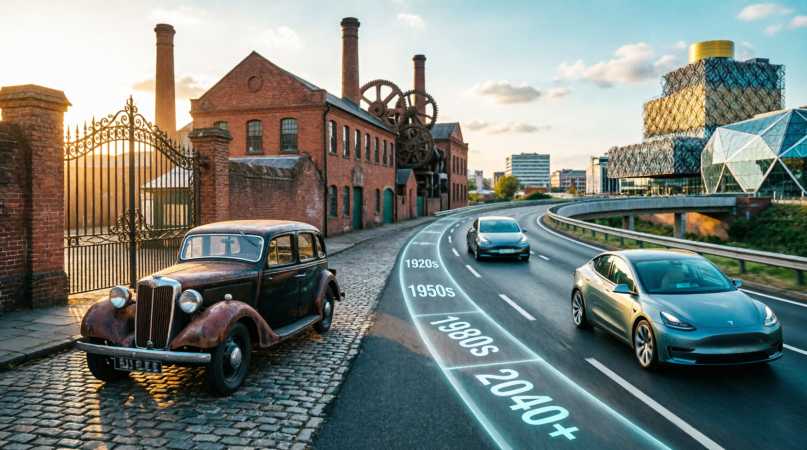
Birmingham has always been a city of drivers. From the glory days of the Longbridge plant to the hum of the M6, cars are baked into the local DNA. However, the vehicles we choose to drive through the city centre have changed over the last few years. The old diesel workhorses are slowly making way for a new generation of cleaner, smarter transport options that suit a modern urban environment.
The way people move around the city is being redefined by new rules and new tastes. There’s a lot to unpack here, so let’s take a closer look at what is currently dominating the city’s tarmac.
Why the SUV Replaced the Hatchback in the Suburbs
In suburbs like Harborne or Sutton Coldfield, the mix of vehicles is starting to take new form. The Ford Focus used to be the default choice for families across the region. Now, it’s been pushed aside for taller crossovers and SUVs that dominate the morning school run. It’s easy to see why these models are popular when you’re trying to spot a gap in heavy traffic around the city.
These cars provide more boot space for shopping trips to the Bullring and feel more settled on the motorway. For many Birmingham drivers, the SUV is the ultimate all-rounder for narrow city streets and weekend trips to the Lickey Hills.
It’s worth pointing out that these larger cars are often seen as the preferred and more comfortable choice for long-distance travel. This shift reflects a broader desire for more versatile vehicles that can handle both urban commutes and family holidays.
How the Clean Air Zone Reshaped the Local Fleet
The Clean Air Zone in the city centre has had a massive impact on what we drive. Before the zone started, older diesel cars were everywhere. They were the backbone of the daily commute for thousands of workers coming in from the Black Country. Now, the daily charge for non-compliant vehicles has made those older models far too expensive to keep. This has forced a rapid modernisation of the local car fleet.
Drivers are switching to petrol hybrids to avoid the fees and lower their carbon footprint. So, you’re likely to see fewer smoking exhaust pipes in the queue for the A38 tunnels than you did five years ago. Because the zone covers all roads within the A4540 Middleway Ring Road, even a short trip to the Jewellery Quarter or the Chinese Quarter now requires a compliant vehicle to avoid the £8 daily penalty.
Modern Car Finance Options Have a Role to Play Too
While the need for cleaner cars is clear, the way Birmingham drivers pay for them has undergone a quiet revolution. With the average transaction price for compliant vehicles remaining high in 2026, the “affordability gap” has made lump-sum purchases much less common.
Most drivers now prioritise “service absorption” in their household budgets, looking for a predictable monthly outgoing instead of depleting their savings. This is especially true for those trading in older, non-compliant diesels that may have dropped in value, leaving them with less equity than they expected.
Many today look for monthly payment plans that fit their household budget. That’s why PCP in Birmingham is quickly becoming the most popular and flexible way to drive a modern car that meets the latest emissions standards.
The Rise of the Electric Commuter
If you spend time in Solihull, you’ll notice a huge surge in electric vehicles. The Tesla Model 3 has become a common sight on every street corner. The network of chargers at the Mailbox has made owning an EV much more practical for those living in city apartments.
Many people are switching because they want to future-proof their transport against further emissions regulations. In fact, many local businesses now offer electric car schemes to their employees as a standard benefit. There are several clear reasons why Birmingham drivers are making the switch to electric:
- Total exemption from Clean Air Zone charges in the city centre.
- Lower daily running costs compared to petrol or diesel alternatives.
- Better availability of charging points in new housing developments.
- The smooth driving experience in heavy city traffic.
The Future of the Diesel Hatchback
The days of the diesel hatchback being the king of the Midlands roads are over. A decade ago, a diesel was the sensible choice for high-mileage drivers. Today, those cars are becoming harder to justify as public perception has shifted towards greener alternatives. People are worried about future bans and the cost of maintenance on complex exhaust systems. Instead of diesel, many are turning to self-charging hybrids.
These cars offer the efficiency of a diesel in the city without the worry of being blocked from certain zones. It’s a pragmatic choice for a city balancing its industrial heritage with a greener future. You can see this shift clearly in the used car forecourts across the city where hybrid models are now the main attraction for local buyers.
The Big Picture
Birmingham’s car habits reflect a city in transition as drivers move away from diesel engines and traditional hatchbacks towards electric power and versatile SUVs. Whether people are looking to avoid daily charges or want a better view of the road, residents of the second city are constantly updating how they drive.
While Birmingham no longer builds cars on its historic scale, its people remain at the forefront of the UK’s changing relationship with the motor car. As EV infrastructure improves, the local fleet will continue to evolve over the next decade, ensuring that the heart of the motor industry keeps beating in the modern world.
