
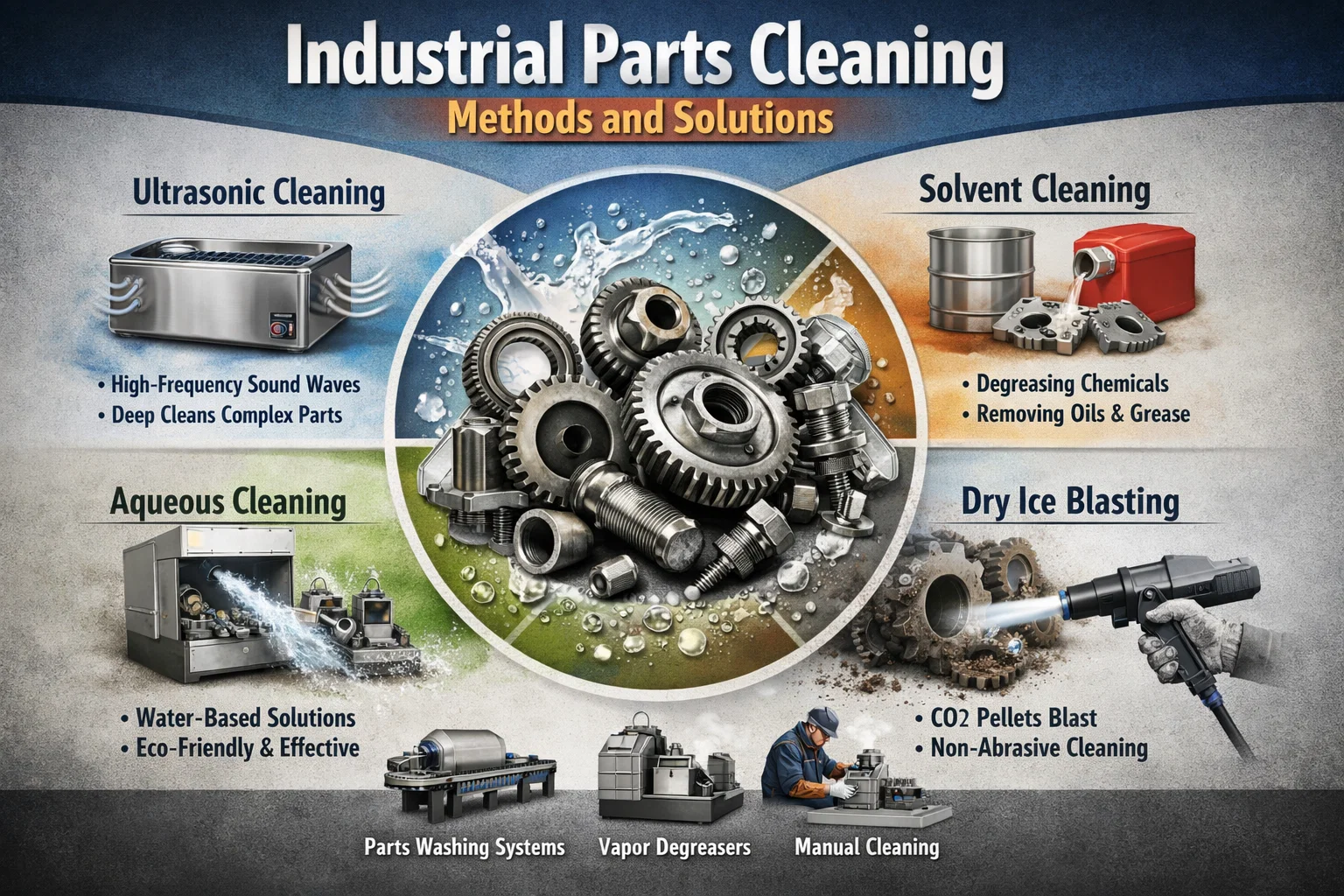
Solvent-Based Cleaning
Solvent-based cleaning cleans, rinses, and dries parts in a single step using a single machine. The parts are placed in a steam degreasing machine filled with a solvent-based cleaning fluid. Most solvent-based cleaning fluids are a mixture of compounds that may include hydrocarbons such as mineral spirits, isopropanol, and ethanol. The combination of compounds determines the cleaning fluid’s effectiveness and its compatibility with the materials. The steam degreaser uses either a single type of cleaning fluid or a custom mixture or formula to remove specific soiling from a specific substrate, thus maximizing cleaning efficiency.
The parts are immersed in the continuously filtered and distilled cleaning fluid to dissolve surface soiling. In some cases, ultrasonic agitation enhances the cleaning power. There is no need to add detergents or additives to dissolve dirt. As parts exit the cleaning fluid, they undergo a brief steam rinse and a drying process. The cleaning fluid condenses and drips back into the steam degreaser for reuse. The steam degreaser reuses and recycles the cleaning fluid hundreds of times before it needs to be refreshed or replaced. This helps reduce hazardous waste disposal costs. Parts emerge clean, rinsed, dried, and ready for the next stage of production.
Steam Degreasing Fluids
n-Propyl bromide (nPB), trichloroethylene (TCE), and perchloroethylene (Perc) are among the most commonly used cleaning fluids in metal fabrication and machine shops. However, many companies are moving away from these older solvents in favor of improved and updated cleaning fluids. The new fluids clean just as effectively, but without the worker safety or air quality issues of older solvents. A number of good, sustainable alternatives with low GWP (Global Warming Potential) and low ODP (Ozone Depletion Potential) are now available on the market.
Which is the best solution for you?
To determine whether aqueous or solvent-based cleaning is better suited to your specific cleaning task, it’s important not to base the decision solely on cost. You need to consider the entire cleaning task and all relevant factors. There are many elements to consider, but three main points stand out: the contamination of the parts, the shape of the parts being cleaned, and the flow rate requirements. These three elements must be taken into account to achieve the best possible cleaning results.
Conclusion
Solvent cleaning remains an extremely effective, one-step solution for degreasing, rinsing, and drying. This technique ensures optimal cleaning of parts through immersion in specific fluids and a continuous solvent recycling system, minimizing costs and reducing hazardous waste. The use of safer, next-generation solvents also contributes to enhanced operator safety and improved ambient air quality in workshops.
However, adopting solvent cleaning requires a rigorous assessment based on production requirements: the nature of the contamination, the complexity of the parts, and the applicable standards. By considering these parameters, companies can fully leverage the advantages of this method, ensuring the conformity of their parts and optimizing the performance of their production equipment. Consequently, solvent cleaning is a key element in guaranteeing reliable and efficient production.
