
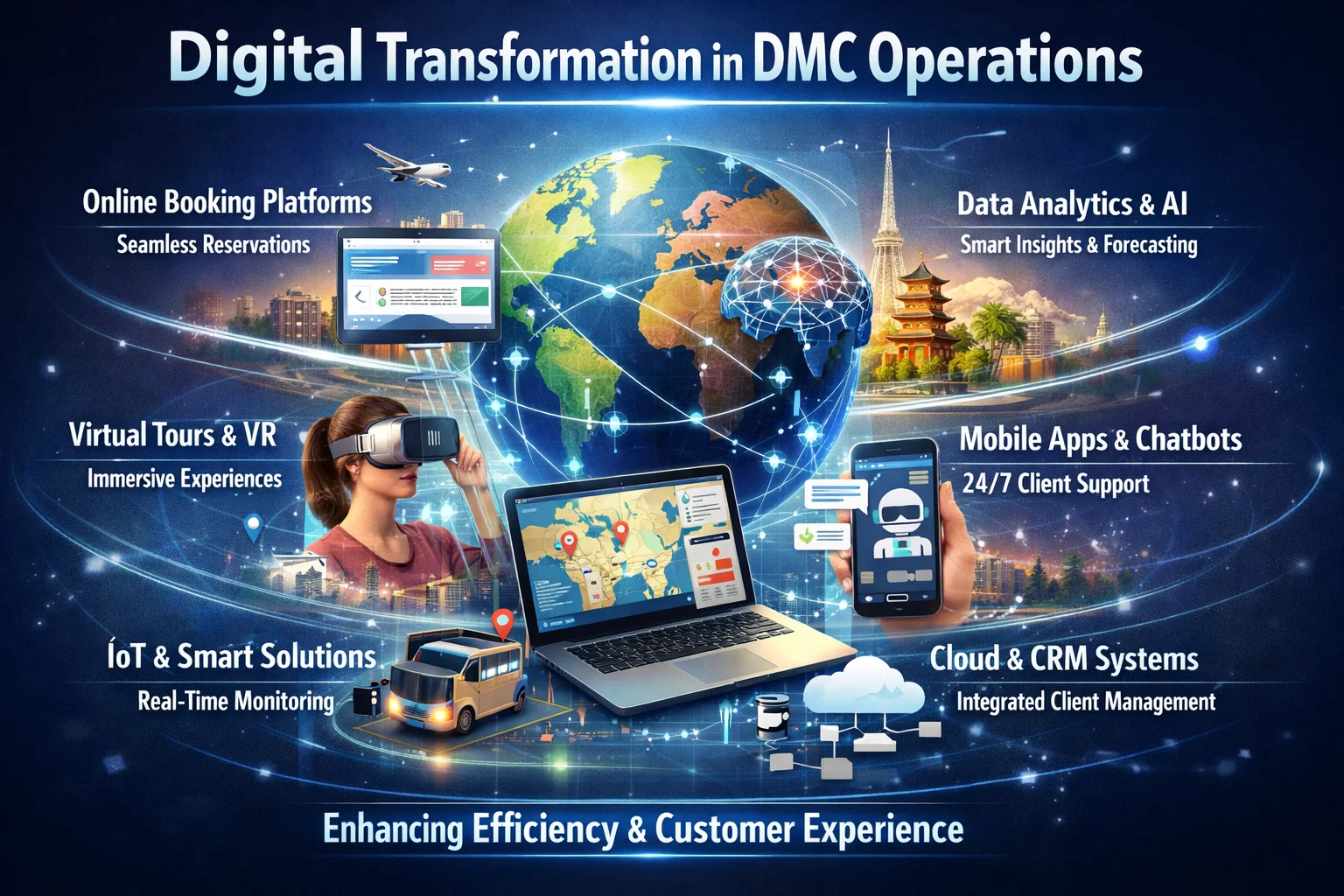
Destination management companies across the UK and Europe are adopting integrated technology platforms that combine booking systems, CRM tools, and real-time communication apps to coordinate complex MICE programs. These digital solutions reduce errors, improve transparency for travel agents, and enable data-driven personalization that was impossible with traditional email-and-phone workflows.
The Technology Stack Modern DMCs Deploy
According to Global DMC Partners’ 2026 Connection conference findings, contemporary DMCs integrate multiple platforms to streamline operations. The core stack includes booking engines, customer relationship management systems like Salesforce, event-specific platforms such as Cvent and Bizzabo, mobile applications, and XML/API connectivity.
The COVID-19 pandemic accelerated this transformation. DMCs that previously relied on manual processes invested heavily in contactless services and flexible digital booking protocols. Today’s MICE-focused DMCs offer clients transparency through platforms that provide real-time itinerary updates, budget tracking, and instant communication channels.
The distinction between tech-enabled and traditional DMCs is clear:
| Tech-Enabled DMC | Traditional DMC |
|---|---|
| Real-time booking platform with instant confirmations | Email-based booking requests with 24-48 hour response |
| API/XML integration for direct system connectivity | Manual data entry and PDF vouchers |
| Mobile app for on-ground coordination | Phone calls and SMS updates |
| CRM with client history and preferences | Spreadsheet-based client tracking |
| Automated reporting and analytics dashboards | Manual Excel reports compiled post-event |
This is not about replacing human expertise with automation. It is about equipping DMC professionals with tools that eliminate repetitive tasks and allow them to focus on creative problem-solving and relationship management.
API Integration Changes Agent-DMC Relationships
XML and API connectivity represents a fundamental shift in how UK travel agents interact with destination management partners. Rather than submitting booking requests via email and waiting for confirmation, agents access DMC inventory directly through their existing systems.
According to industry analysis from Daily Business Group, this integration allows real-time access to availability and pricing. Agents remain within their own interfaces while querying multiple DMC inventories simultaneously. The technical architecture eliminates manual re-keying of data, which historically caused errors in guest names, dates, and special requirements.
Implementation varies by DMC sophistication. Some offer full bidirectional APIs that push booking confirmations and modifications back to agent systems automatically. Others provide read-only XML feeds that require agents to confirm bookings through a secondary channel. The most advanced DMC partnerships include webhook notifications for itinerary changes, cancellations, or urgent updates.
For UK agents evaluating potential DMC partners, API capability has become a differentiator. Agencies handling high volumes of group travel and MICE programs prioritize DMCs offering integration, as manual workflows do not scale.
AI Applications Beyond ChatGPT Hype
Artificial intelligence adoption in the DMC sector is accelerating, but practical applications differ significantly from the consumer-facing chatbots dominating headlines. According to Global DMC Partners, DMCs deploy AI for data analysis, personalization engines, and operational optimization rather than customer service automation.
Customizable analytics tools track key performance indicators, conduct market analysis, and refine marketing strategies based on sales performance and customer preferences. This data-driven approach allows DMCs to identify patterns that inform destination recommendations, predict demand fluctuations, and optimize pricing strategies.
Personalization engines analyze historical booking data to suggest relevant experiences. When a corporate client books an incentive trip, the system flags preferred accommodation styles, dietary requirements from past events, and activity preferences of specific traveler demographics. This is not AI replacing human judgment but augmenting it with pattern recognition across thousands of bookings.
The limitations are clear. AI cannot replicate local knowledge, cultural nuance, or the creative problem-solving required when weather forces last-minute itinerary changes or when a venue cancels three weeks before an event. Technology handles the data; humans handle the exceptions.
Mobile Platforms for On-Ground Coordination
Mobile applications have become essential infrastructure for DMC operations, particularly in multi-day MICE programs where participants need real-time information. According to research from Touramigo, these apps provide itinerary access, venue maps, transportation schedules, emergency contacts, and push notifications for last-minute changes.
For ground operators, mobile platforms streamline logistics coordination. Drivers receive pickup schedules with participant lists, venue staff access dietary requirements and AV specifications, and tour guides view updated group sizes and special accessibility needs. The entire operation synchronizes through a single platform rather than relying on printed documents and radio communication.
UK agents benefit from this infrastructure when managing clients on the ground. Rather than fielding phone calls about shuttle times or restaurant locations, participants reference the app. When changes occur, a single update propagates to all stakeholders instantly.
Not all DMC mobile apps offer equivalent functionality. Basic versions provide read-only itineraries, while advanced platforms include features like:
| Feature | Agent Benefit | Participant Benefit |
|---|---|---|
| Real-time push notifications | Reduced inbound queries during events | Instant awareness of schedule changes |
| Offline access | Functionality in areas with poor connectivity | Access to critical information without data |
| Integrated messaging | Direct line to ground team | Support channel without international calling |
| Feedback collection | Post-event data for future improvements | Easy way to report issues or praise experiences |
| Digital vouchers | Paperless confirmations reduce lost documents | Convenience and environmental benefit |
The mobile component is not a standalone solution but part of an integrated ecosystem. Data flows between the booking platform, CRM, mobile app, and reporting system. This connectivity is what differentiates modern DMC operations from digitized versions of traditional workflows.
Data Security and GDPR Compliance Considerations
Digital transformation introduces data protection obligations that UK agents must verify before engaging DMC partners. GDPR compliance is not optional for DMCs handling European client data, regardless of where the DMC is headquartered.
Tech-enabled DMCs processing personal information, payment details, passport data, and travel preferences must implement encryption, access controls, data retention policies, and breach notification procedures. According to industry standards, this includes secure data transmission via HTTPS and TLS protocols, role-based access ensuring only authorized personnel view sensitive information, automated deletion of data after legally mandated retention periods, and documented incident response plans.
UK agents bear responsibility for conducting due diligence on DMC data practices. This is not merely checking a box on a vendor questionnaire but understanding how systems protect client information. Questions to ask include where client data is stored geographically, whether the DMC uses third-party processors and if so which ones, how long different data types are retained, and what encryption standards protect data in transit and at rest.
The largest DMCs undergo annual security audits and maintain ISO 27001 certification. Smaller operators may lack formal certifications but should still demonstrate adequate security practices. The absence of documented data protection policies is a red flag, particularly given the financial and reputational risks of data breaches.
Evaluating DMC Technology Without Technical Expertise
UK travel agents evaluating potential DMC partners need not be technology experts to assess capabilities effectively. The evaluation focuses on outcomes rather than technical specifications.
Request a platform demonstration showing the complete workflow from enquiry to post-event reporting. Observe how many steps require manual intervention, whether the system flags potential conflicts or errors, and how easily information can be retrieved. A well-designed platform feels intuitive; if the demonstration requires extensive explanation, the system likely suffers from poor user experience design.
Test response times for real-time communication channels. Send an enquiry through the DMC’s system during business hours and measure response time. Repeat during off-hours to understand after-hours support capabilities. Technology means nothing if messages sit unread for hours.
Ask for references from other UK agents currently using the DMC’s technology. Specific questions to pose include how often the platform experiences downtime, whether API integration worked smoothly or required extensive troubleshooting, if mobile apps functioned reliably during events, and whether reporting met expectations or required manual supplementation.
Verify that the DMC’s technology roadmap aligns with your agency’s growth plans. A platform that meets current needs but cannot scale or integrate with your future systems will require replacement. Understanding the DMC’s investment in technology development indicates their commitment to remaining competitive.
The goal is not finding the most technologically advanced DMC but rather identifying partners whose digital capabilities match your operational requirements and client expectations.
Frequently Asked Questions
What technology platforms do modern DMCs use?
Modern DMCs use integrated booking systems, CRM platforms like Salesforce, event management software (Cvent, Bizzabo), mobile applications for real-time updates, XML/API connectivity for direct B2B integration, and AI-powered analytics tools for personalization and data-driven decisions.
How does API integration benefit UK travel agents working with DMCs?
API integration allows UK travel agents to access DMC inventory and booking data in real-time without leaving their own systems. This eliminates manual data entry, reduces booking errors, speeds up confirmation times, and provides instant access to availability and pricing information.
Is AI replacing human DMC expertise?
No. AI is not replacing human DMC expertise but enhancing it. While AI handles data analysis, booking automation, and pattern recognition, human DMC professionals provide local knowledge, creative problem-solving, relationship management, and the nuanced understanding of client needs that technology cannot replicate.
What is the difference between a tech-enabled DMC and a traditional DMC?
A tech-enabled DMC uses digital platforms for booking, communication, and reporting, offering real-time updates, API connectivity, mobile apps, and data analytics. Traditional DMCs rely primarily on email, phone communication, and manual processes with limited real-time visibility or system integration.
How can UK agents verify a DMC’s technology capabilities?
UK agents should request demonstrations of the DMC’s booking platform, ask about API/XML integration options, inquire about mobile app availability, check their CRM and reporting capabilities, request references from other agents using their technology, and test response times for real-time communication channels.
