
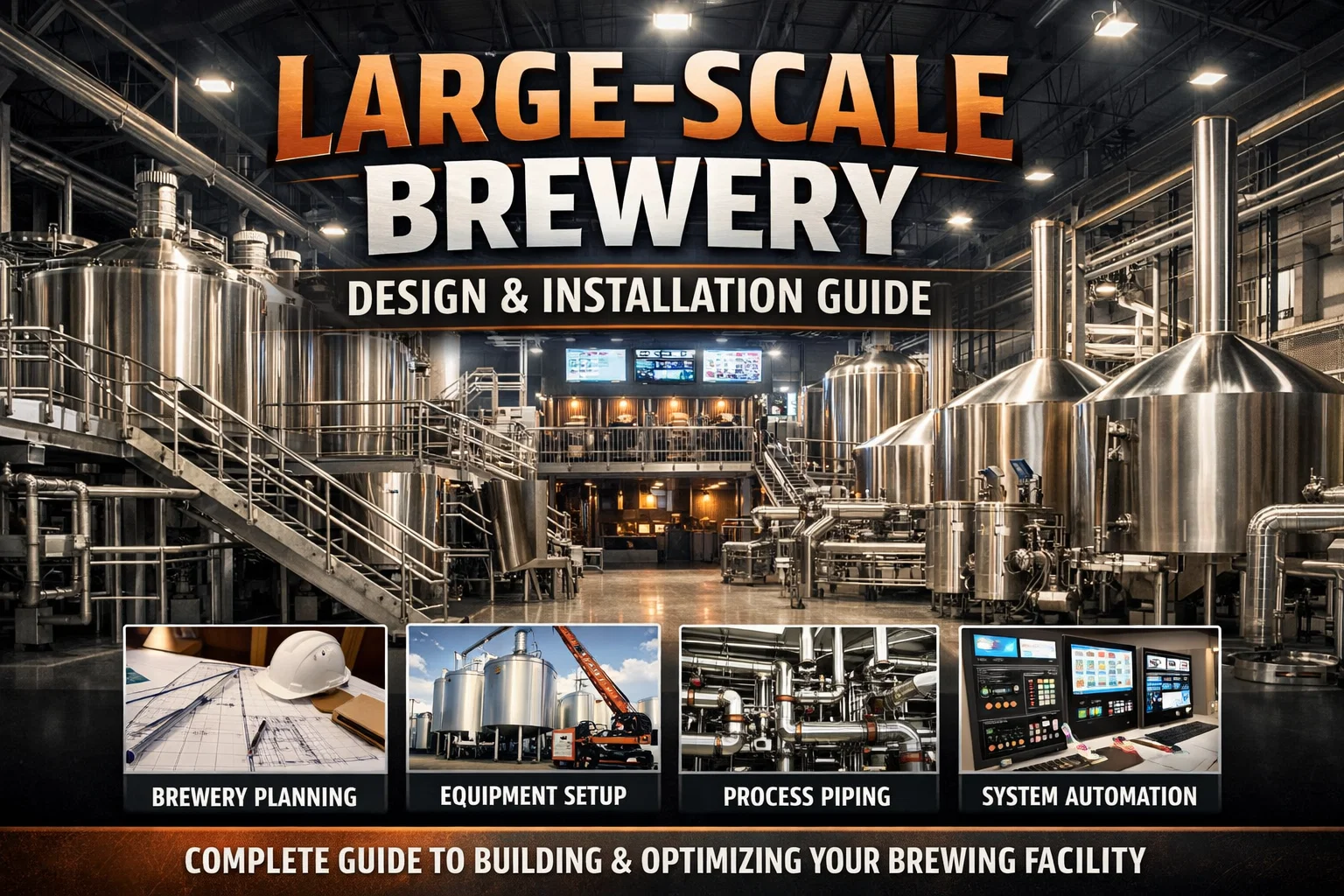
Designing and installing a large-scale brewery system is a complex, multi-phase process that requires careful planning, engineering expertise, and a clear understanding of production goals. Unlike small craft setups, large-scale breweries must operate with high efficiency, consistency, and scalability while meeting strict quality and regulatory standards.
From brewhouse configuration and fermentation capacity to automation, utilities, and installation logistics, every decision plays a critical role in long-term success. In this comprehensive guide, we will explore how to design and install a large-scale brewery system, helping you build a facility that supports high-volume production and sustainable growth.
Understanding Large-Scale Brewery Systems
A large-scale brewery system is designed for high production output, typically ranging from tens of thousands to millions of barrels per year. These systems are built to maximize efficiency, reduce labor costs, and maintain consistent product quality across large batches.
Unlike smaller breweries, large-scale operations rely heavily on automation, advanced process control, and integrated workflows. Every component from raw material handling to packaging must be optimized to handle continuous production.
A complete large-scale brewery system typically includes:
- Brewhouse (multi-vessel system)
- Fermentation tanks (unitanks)
- Bright beer tanks
- Cooling and glycol systems
- Automation and control systems
- Cleaning systems (CIP)
- Packaging lines
- Utility infrastructure
Working with experienced providers offering full brewery system solutions can help ensure that all components are properly integrated and aligned with production requirements.
Defining Production Goals and Capacity
The first step in designing a large-scale brewery is defining your production goals.
Key questions to consider include:
- What is your annual production target?
- What beer styles will you produce?
- What is your packaging strategy (kegs, cans, bottles)?
- What growth rate do you expect over the next 5–10 years?
These factors determine the size and configuration of your equipment.
For example, a brewery producing mostly lagers will require more fermentation capacity due to longer fermentation times. A brewery focused on IPAs may prioritize faster turnaround and dry-hopping capabilities.
Accurate planning at this stage prevents bottlenecks and ensures efficient use of resources.
Brewhouse Design for High Efficiency
The brewhouse is the starting point of production and must be designed for maximum efficiency.
Multi-Vessel Systems
Large-scale breweries typically use 3-, 4-, or 5-vessel brewhouses, allowing multiple processes to occur simultaneously. This increases throughput and reduces brew cycle time.
Automation and Control
Automated brewhouses control temperature, flow rates, and timing with precision. This ensures consistent wort production and reduces human error.
Heat Recovery Systems
Energy efficiency is critical at scale. Heat recovery systems reuse energy from previous batches, reducing operating costs.
Material Handling
Automated grain handling systems improve efficiency and reduce labor requirements.
A well-designed brewhouse ensures smooth and continuous production.
Fermentation and Tank Capacity Planning
Fermentation tanks are the backbone of production capacity.
Unitank Systems
Most large breweries use unitanks, which combine fermentation and conditioning in one vessel. This reduces transfers and saves space.
Tank Sizing and Quantity
Tank size should align with brewhouse capacity. A common guideline is to have 2–4 times brewhouse volume in fermentation capacity.
Bright Beer Tanks
Bright tanks are used for carbonation and storage before packaging. Their capacity must match packaging speed to avoid delays.
Flexibility for Different Styles
Tank design should accommodate different beer styles, including those requiring longer fermentation or special processes.
Proper tank planning ensures continuous production without bottlenecks.
Automation and Digital Integration
Automation is essential for large-scale brewery operations.
Process Control Systems
Modern breweries use PLC (Programmable Logic Controller) systems to manage brewing, fermentation, and cleaning processes.
Data Monitoring
Real-time data tracking allows operators to monitor temperature, pressure, and flow rates, ensuring optimal conditions.
Recipe Management
Automation systems can store and execute recipes, ensuring consistency across batches.
Remote Access
Advanced systems allow remote monitoring and control, improving operational flexibility.
Automation reduces labor costs, improves consistency, and enhances overall efficiency.
Utility Systems and Infrastructure
Large-scale breweries require robust utility systems to support operations.
Water Systems
Water quality and availability are critical. Treatment systems may include filtration, softening, and mineral adjustment.
Steam and Heating Systems
Steam systems are commonly used for heating in large breweries due to their efficiency and scalability.
Glycol Cooling Systems
Cooling systems maintain fermentation temperatures and support heat exchange processes.
Electrical Systems
Reliable electrical infrastructure is necessary to support automation and equipment operation.
Wastewater Management
Proper wastewater treatment is essential for environmental compliance and sustainability.
Well-designed utilities ensure smooth and efficient operations.
Brewery Layout and Facility Design
An efficient layout is crucial for large-scale production.
Workflow Optimization
Design the facility to follow a logical flow:
Raw materials → Brewing → Fermentation → Packaging → Storage
Space Planning
Allow sufficient space for:
- Equipment maintenance
- Cleaning operations
- Staff movement
- Future expansion
Safety Considerations
Ensure proper ventilation, emergency access, and compliance with safety regulations.
Collaborating with experts in craft brewery equipment systems can help create a layout that maximizes efficiency and scalability.
Installation Process and Project Management
Installing a large-scale brewery system is a complex project that requires careful coordination.
Pre-Installation Preparation
- Finalize facility construction
- Install utilities
- Ensure compliance with regulations
Equipment Delivery and Assembly
Large equipment must be transported and assembled on-site. Proper handling is essential to prevent damage.
System Integration
All components must be connected and tested to ensure seamless operation.
Commissioning and Testing
Before production begins, the system must be tested for:
- Temperature control
- Pressure stability
- Automation functionality
A well-managed installation process ensures a smooth startup.
Quality Control and Consistency
Consistency is critical in large-scale brewing.
Standard Operating Procedures (SOPs)
Establish clear procedures for brewing, fermentation, cleaning, and packaging.
Laboratory Testing
Monitor key parameters such as:
- Gravity
- pH
- Microbial activity
Sanitation
Effective cleaning systems and strict hygiene practices are essential.
Maintaining high standards ensures product quality and brand reputation.
Scaling and Future Expansion
Large-scale breweries must plan for growth.
Modular Design
Choose equipment that can be expanded or upgraded as needed.
Additional Tank Capacity
Leave space for additional fermentation and storage tanks.
Upgrading Automation
As production increases, more advanced automation may be required.
Planning for expansion reduces future costs and disruptions.
Common Challenges and Solutions
Bottlenecks
Solution: Balance brewhouse and fermentation capacity.
Energy Costs
Solution: Implement energy-efficient systems and heat recovery.
Labor Efficiency
Solution: Invest in automation and streamlined workflows.
Maintenance
Solution: Establish preventive maintenance programs.
Addressing these challenges ensures long-term success.
Conclusion: Building a High-Performance Brewery System
Designing and installing a large-scale brewery system requires careful planning, advanced engineering, and a focus on efficiency and scalability. Every component—from brewhouse design to tank capacity and automation—must work together to support high-volume production and consistent quality.
By taking a comprehensive approach to brewery design, you can build a facility that not only meets current production needs but also supports future growth.
For breweries seeking reliable and high-performance solutions, Micet’s equipment products offer an excellent choice. With advanced engineering, customizable designs, and proven durability, Micet provides brewing systems that help large-scale operations achieve efficiency, consistency, and long-term success.
FAQs
1. What is the most important factor in large-scale brewery design?
Balancing brewhouse capacity with fermentation and packaging systems is crucial to avoid production bottlenecks.
2. How long does it take to install a large-scale brewery?
Installation typically takes several months, depending on system size and facility readiness.
3. Is automation necessary for large-scale breweries?
Yes, automation is essential for maintaining consistency, reducing labor costs, and managing complex operations at scale.
