
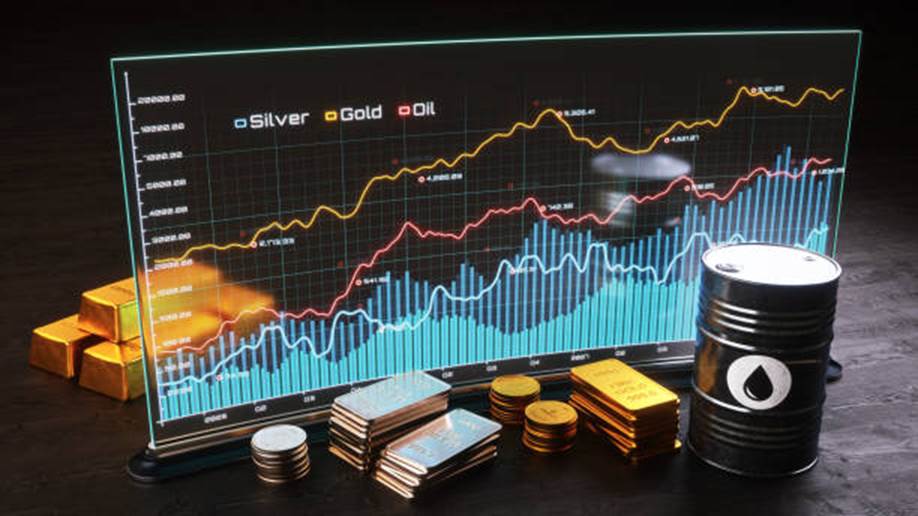
Silver spent years in gold’s shadow. That changed in 2025, when prices climbed more than 130% on the back of industrial demand and tariff-related uncertainty. By January 2026, silver crossed $100 per ounce for the first time, reaching an intraday high of $120.565. Even at that more conservative projection, the case for silver exposure is harder to ignore than it was two years ago. The question isn’t whether silver is having a moment. It’s how to position for it without taking on more risk than necessary.
The Main Ways to Get Silver Exposure
Investors researching how to invest in silver stock will find three practical routes: physical silver ETFs, silver mining stocks, and mining ETFs. Each carries a different risk profile and behaves differently depending on where silver prices are heading.
Physical Silver ETFs
The most direct option for gaining silver exposure. Funds like iShares Silver Trust (SLV) and Abrdn Physical Silver Shares (SIVR) are among the most liquid vehicles available, with pricing that closely mirrors the actual spot price of silver.
Key advantages:
- No storage requirements
- No single-company risk
- Easy to buy and sell through a standard brokerage account
For investors who want clean price exposure without the complexity of mining operations, this is typically the starting point.
Silver Mining Stocks
Mining stocks take a different approach. They tend to outperform the silver price during strong rallies because higher prices expand profit margins. A mine with a production cost of $20 per ounce earns far more when silver is at $100 than at $25. That leverage works in the investor’s favor during bull runs, but it cuts both ways. Mining stocks are operationally complex, exposed to geopolitical risk, and can underperform even when the underlying metal does well.
Silver Mining ETFs
Mining ETFs sit somewhere in between. They spread exposure across multiple companies, which reduces single-stock risk while still capturing some of the leverage that makes mining equities attractive in the first place.
Why the Supply Picture Matters
Adding silver stocks to a portfolio isn’t just a bet on price momentum. The supply and demand fundamentals provide a longer-term argument.
The silver market is expected to remain in deficit for a sixth consecutive year in 2026:
- Demand projected at 1,196 million ounces
- Supply expected at only 1,061 million ounces
- Silver recycling projected to rise 7%, surpassing 200 million ounces for the first time since 2012
That gap doesn’t close quickly. Over 75% of silver is produced as a by-product of copper and gold mining, which means producers can’t simply ramp up output in response to price signals. China tightened silver export quotas starting January 2026, adding further pressure on international spot markets.
For investors holding silver stocks, this supply tightness is a supporting condition. It doesn’t guarantee price appreciation, but it does mean the market isn’t heading into a period of oversupply that would drag prices down.
Industrial Demand Is Driving the Story
Silver is no longer primarily a monetary metal or a jewelry input. Industrial and technology applications accounted for 61% of total global silver demand in 2025, up from 53% a decade earlier. The key demand drivers breaking down as follows:
- Solar PV: consumed 29% of all industrial silver demand in 2024, with global capacity forecast at 665 GW in 2026, requiring 120 to 125 million ounces from panels alone
- Electric vehicles: production forecast at 14 to 15 million units in 2026, adding 70 to 75 million ounces of demand
- Grid upgrades and data centers: projected to contribute an additional 15 to 20 million ounces
This demand profile matters when evaluating mining stocks specifically. Companies with production tied to industrial-grade silver supply are increasingly connected to the energy transition, not just commodity cycles.
What to Watch Before Buying
The gold-to-silver ratio currently sits near 64, having widened from the extreme compression of 38 seen in January. While it has moved toward the long-term historical average of 80, many analysts still view a ratio in the 60s as a signal of silver’s relative undervaluation compared to gold.
To put the potential upside in perspective:
- The “Mean Reversion” Scenario: If the ratio were to return to its recent volatility low of 35, with gold currently stabilizing around $4,670 per ounce, silver would theoretically climb back toward $133 per ounce.
- The Ceiling Case: While a historic low ratio of 30 remains a theoretical “ceiling-case” scenario, it illustrates the significant leverage silver can offer during periods of high industrial deficit.
Volatility: The Double-Edged Sword High returns in silver equities rarely come in a straight line. Investors should be prepared for significant price swings:
- Historical Drawdowns: Silver mining ETFs like SIL and SLVP have historically seen maximum drawdowns of around 55% over five-year cycles.
- Growth Comparison: Despite the volatility, a $1,000 investment in SLVP over the last five years (leading into 2026) grew to $2,945, while SIL reached $2,592.
Because of these sharp corrections—like the one witnessed in March 2026—position sizing is critical. Silver stocks should typically represent a managed portion of a diversified portfolio rather than a singular speculative bet.
Building the Position
For most investors, a blended approach makes sense:
- A core position in a physical silver ETF provides stable, direct price exposure
- A smaller allocation to mining stocks or a mining ETF adds leverage without concentrating risk in a single company
Fresnillo, the London-listed silver miner, achieved a 452.5% gain in 2025 and was the top performer on the FTSE 100. Results like that are possible in mining equities, but they aren’t the baseline expectation. The more realistic case is steady outperformance relative to the physical metal during prolonged price upswings, offset by sharper drawdowns during corrections.
Silver’s supply deficit, industrial demand growth, and current ratio dynamics all point in the same direction. How much exposure makes sense depends on risk tolerance and time horizon, but the structural case for having some is stronger now than it has been in years.
