
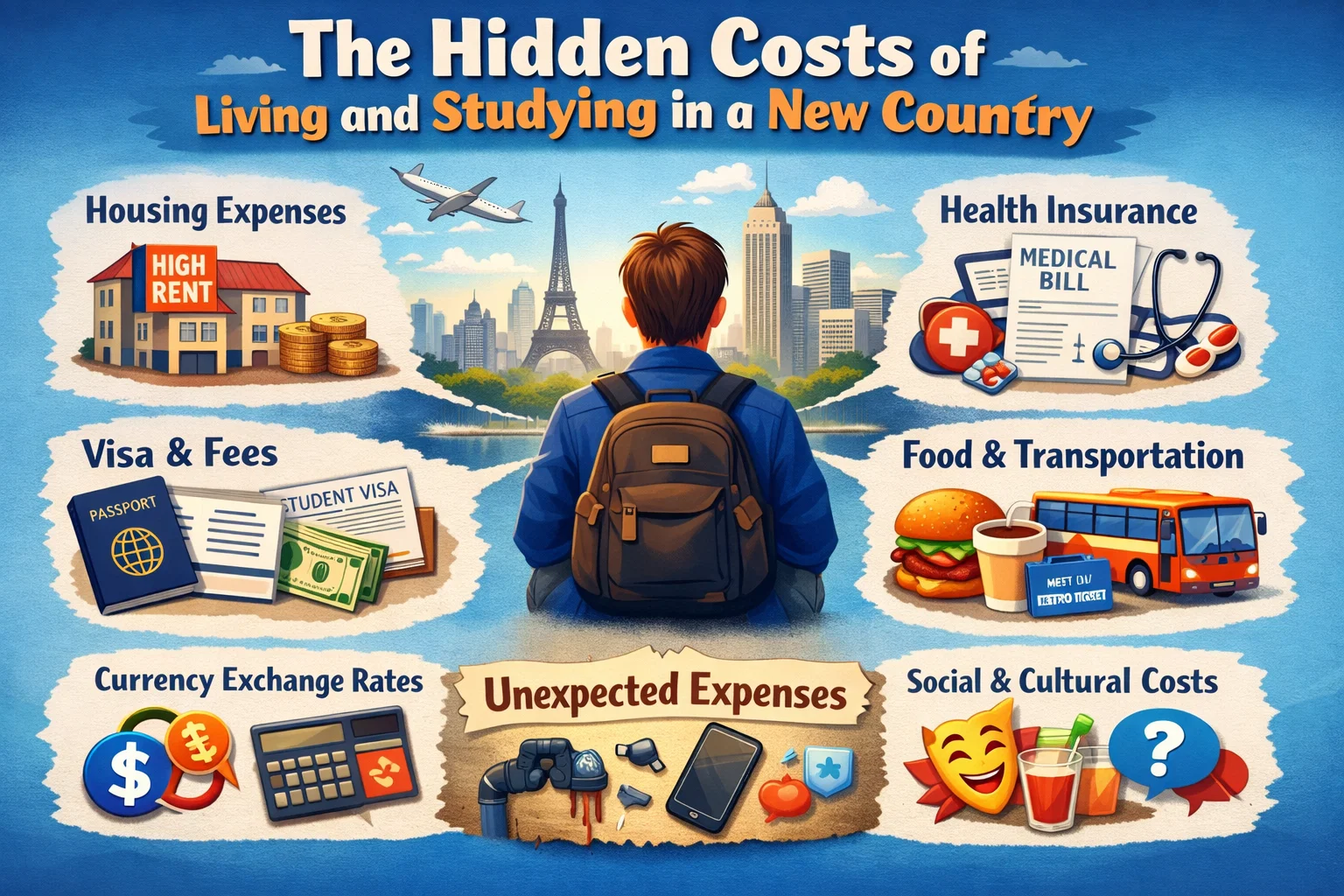
Planning to move overseas for education is exciting. Most students carefully calculate tuition fees, visa costs, and accommodation expenses before they Study Abroad. However, what many don’t realise is that there are several hidden costs that can significantly impact their budget.
These costs are not always obvious at the start, but they quickly become part of everyday life. Understanding them in advance can help students plan better and avoid unnecessary financial stress.
Initial setup costs add up quickly
The first few weeks in a new country are often the most expensive. Students need to set up their lives from scratch, which includes:
- buying basic furniture or household items
- paying deposits for accommodation
- setting up utilities like electricity and internet
Many landlords require a security deposit, which can be equal to one or two months’ rent. On top of that, students may need to purchase bedding, kitchen items, and other essentials.
These one-time costs can feel overwhelming if they are not planned in advance.
Cost of living is often underestimated
Even when students research living expenses, the actual costs can still be higher than expected. Prices vary depending on the city, lifestyle, and personal habits.
Daily expenses include:
- groceries and food
- public transport or fuel
- mobile plans and internet
- personal care and entertainment
Small, regular expenses may not seem significant individually, but they add up over time. Students who Study Abroad often realise that managing these ongoing costs requires careful budgeting.
Health insurance and medical expenses
Health insurance is mandatory in many countries, but the coverage may not include everything. Students often need to pay for:
- doctor visits
- medications
- dental care
In some cases, even basic healthcare services can be expensive. Unexpected medical issues can put additional pressure on finances.
It is important to understand what the insurance covers and set aside extra funds for emergencies.
Transportation costs can vary
Transportation is another area where costs can be unpredictable. While some cities have affordable public transport, others may require higher spending.
Students may need to budget for:
- monthly travel passes
- occasional taxis or ride-sharing services
- travel between cities
In some cases, living farther from campus to save on rent can increase transportation costs. Finding the right balance is important.
Currency exchange and banking fees
Financial transactions across countries often come with hidden charges. These include:
- currency conversion fees
- international transaction charges
- bank account maintenance fees
Students who transfer money from their home country may lose a portion of it due to exchange rate fluctuations and service fees.
Over time, these small deductions can make a noticeable difference in overall expenses.
Academic-related expenses
While tuition fees are the main cost, there are several additional academic expenses that students may not expect.
These include:
- textbooks and study materials
- printing and software subscriptions
- lab fees or project costs
In some courses, these expenses can be quite high. Digital resources have reduced some costs, but they have not eliminated them completely.
Students who Study Abroad often realise that education involves more than just paying for classes.
Social and lifestyle spending
Living in a new country also means exploring new experiences. Social activities, travel, and entertainment are part of student life.
Expenses may include:
- dining out with friends
- weekend trips
- cultural events and activities
While these experiences are valuable, they can also impact the budget if not managed properly. Finding a balance between enjoying life and controlling spending is essential.
Part-time work limitations
Many students plan to support themselves through part-time work. While this is possible, there are limitations.
Some challenges include:
- restricted working hours
- difficulty finding jobs initially
- balancing work with studies
Income from part-time work may not always cover all expenses. Relying entirely on it can lead to financial stress.
Having a backup financial plan is always a safer approach.
Unexpected emergencies
Unexpected situations can arise at any time. These may include:
- Urgent travel back home
- sudden medical issues
- repairs or replacement of essential items
Such expenses are rarely planned but can have a significant impact. Setting aside an emergency fund is one of the smartest decisions students can make.
The cost of adapting to a new lifestyle
Adjusting to a new country often involves trying new things. From clothing suitable for the weather to local food preferences, these changes come with additional costs.
For example:
- Winter clothing in colder countries can be expensive
- Dietary adjustments may increase grocery bills
- local services may cost more than expected
These lifestyle changes are part of the overall experience but should be considered in financial planning.
Final thoughts
Moving to a new country for education is a valuable investment in the future. However, it is important to look beyond the obvious expenses and prepare for hidden costs.
When students decide to Study Abroad, they should create a realistic budget that includes both expected and unexpected expenses. This helps in avoiding financial pressure and allows them to focus on their studies and experiences.
With proper planning and awareness, students can manage their finances effectively and make the most of their journey. After all, the goal is not just to survive in a new country, but to thrive and build a successful future.
