
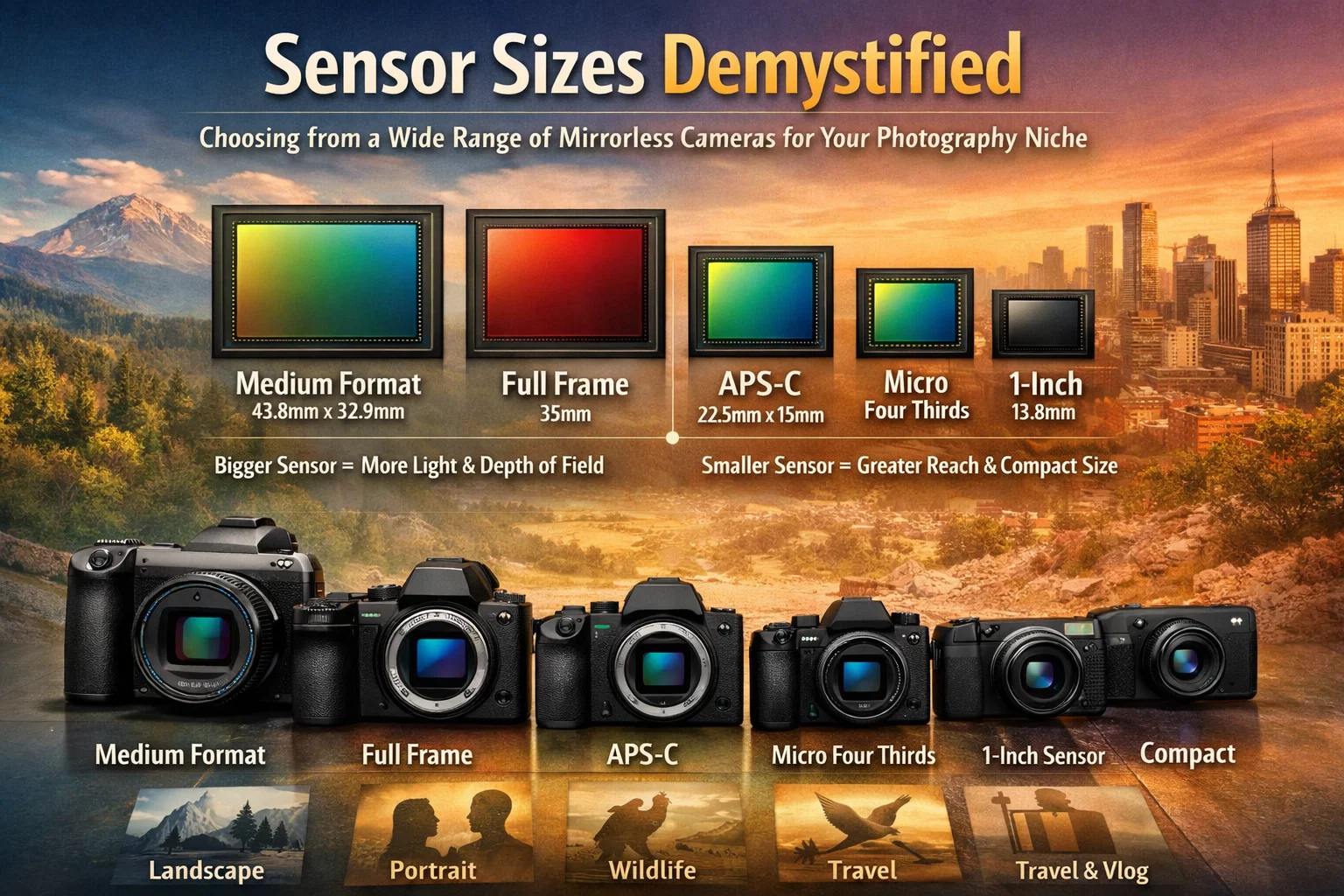
Choosing a camera is rarely just about the body design, megapixel count, or the newest features on a spec sheet. One of the biggest factors shaping image quality, lens behaviour, low-light performance, portability, and even shooting style is sensor size. That is why photographers comparing a wide range of mirrorless cameras often benefit from understanding sensors first before looking at brands, price tiers, or advanced features.
Sensor size affects how a camera sees the world. It influences depth of field, field of view, dynamic range, background separation, file flexibility, and how large or small a camera kit may become over time. For a travel photographer, that can mean the difference between a compact setup and a heavy bag. For a portrait photographer, it may shape how easily soft background blur is achieved. For a sports or wildlife shooter, it may affect reach, burst performance, and lens choice.
That does not mean one sensor size is best for everyone. The better approach is to match the sensor format to the kind of photography you actually do. For photographers browsing options through Diamonds Camera, that mindset is often far more useful than chasing the most expensive model in the category.
Why Sensor Size Matters More Than Most Buyers Expect
A digital sensor is the surface that captures light and turns it into an image. Larger sensors generally gather more light and often offer stronger low-light performance, wider dynamic range, and greater control over shallow depth of field. Smaller sensors, on the other hand, can help create lighter systems, extend effective reach, and lower the cost of entry.
What matters is not simply size alone, but how that size affects your overall shooting experience. Two cameras may both be mirrorless and both look appealing on paper, yet feel completely different in real-world use because of the sensor format behind them.
A landscape photographer may value dynamic range and detail recovery. A street photographer may care more about portability and speed. A travel creator may want a system that balances quality with convenience. Once you understand the role of the sensor, those buying decisions become much clearer.
Full-Frame Sensors: Strong All-Round Performance for Demanding Work
Full-frame sensors are often seen as the premium choice, and for good reason. They are physically larger than APS-C and Micro Four Thirds sensors, which usually gives them advantages in low light, tonal flexibility, and background separation.
Best for Portrait, Wedding, Commercial, and Low-Light Photography
Portrait photographers often prefer full frame because it helps create a more pronounced separation between subject and background. Wedding photographers value its ability to perform in difficult lighting while preserving detail and colour. Commercial shooters may also prefer full frame for the flexibility it offers in editing and printing.
This does not mean full frame is automatically the smartest choice for everyone. The trade-off is usually cost, size, and weight. Bodies may be larger, lenses can be heavier, and building a full-frame kit often requires a bigger long-term budget.
Where Full Frame Makes the Most Sense
If your work depends on image quality under pressure, such as client shoots, events, professional portraits, or detailed landscape editing, full frame is often a strong fit. It is also attractive for hybrid creators who want strong stills and video performance in one system.
APS-C Sensors: The Balanced Choice for Many Photographers
APS-C sits in a sweet spot for a wide section of the market. It offers a good balance between image quality, portability, performance, and affordability. For many photographers, especially enthusiasts and growing professionals, APS-C is the most practical place to start and often the best place to stay.
Best for Travel, Street, Everyday, and Enthusiast Photography
APS-C systems are popular among travel photographers because they often combine strong image quality with lighter lenses and bodies. Street photographers also tend to appreciate their portability and speed. Content creators, hobbyists, and general photographers often find APS-C more than capable for daily use, social content, prints, and personal projects.
Another benefit is value. APS-C often gives photographers access to advanced autofocus, strong burst rates, and interchangeable lens systems without the cost jump that full frame can bring.
The Crop Factor Advantage
APS-C sensors introduce a crop factor, which changes the effective field of view compared with full frame. This can be an advantage, especially for wildlife or sports photographers who want more apparent reach from telephoto lenses. A lens that feels moderate on full frame can become more practical for distant subjects on APS-C.
Micro Four Thirds: Small, Fast, and Travel-Friendly
Micro Four Thirds uses a smaller sensor than APS-C, but that does not make it a lesser choice. In fact, for some niches, it can be one of the smartest formats available.
Best for Travel, Wildlife Reach, Video, and Lightweight Kits
One of the biggest advantages of Micro Four Thirds is system size. Bodies and lenses can be smaller and lighter, which makes the format highly appealing for travel, hiking, documentary work, and creators who move a lot. The smaller sensor also increases effective reach, which can be useful for birding, outdoor photography, and telephoto-heavy shooting without requiring massive lenses.
Video shooters sometimes appreciate the format as well, particularly when portability, stabilisation, and lens flexibility matter more than maximum background blur.
When Micro Four Thirds Is the Right Fit
If you value a compact setup, longer effective reach, and a lighter carrying load, Micro Four Thirds deserves serious attention. It may not be the first choice for everyone chasing ultra-shallow depth of field, but it can be a very smart system for practical, mobile photography.
Matching Sensor Size to Your Photography Niche
The best sensor is the one that supports your actual work. Too many buyers choose based on online hype rather than photographic purpose.
For Portrait Photographers
Full frame is often the most attractive choice because of its natural advantage in low light and shallow depth of field. It is especially strong for studio portraits, location sessions, branding shoots, and weddings.
For Travel and Street Photographers
APS-C and Micro Four Thirds are often ideal because they reduce overall kit size while still delivering strong image quality. Smaller cameras are easier to carry every day and often make candid shooting more comfortable.
For Landscape Photographers
Full frame is often favoured for dynamic range and editing flexibility, but APS-C can still be an excellent option, especially for photographers who prioritise portability on long hikes or frequent travel.
For Sports and Wildlife Photographers
APS-C and Micro Four Thirds can be highly practical because the crop factor makes telephoto work more accessible. You can often get more subject reach without stepping into oversized lens setups.
For Content Creators and Hybrid Shooters
APS-C is often the most balanced choice, especially for creators who need good photo and video performance at a manageable price. Full frame becomes more appealing when low-light video, stronger subject separation, or higher-end client work enters the picture.
Other Factors That Matter Beyond Sensor Size
Sensor size is important, but it is not the only decision point. Autofocus, lens availability, ergonomics, burst speed, stabilisation, video features, battery life, and long-term system cost all matter too.
That is why buyers should think in terms of system fit, not just sensor size. A camera that looks impressive on paper can still be the wrong choice if the lenses are too expensive, the body feels awkward in hand, or the kit becomes too heavy for the way you shoot.
This is where comparing mirroless cameras by use case becomes more useful than comparing them only by resolution or launch year.
The Smarter Way to Choose
Sensor sizes are not something to fear or overcomplicate. They are simply one of the clearest ways to narrow your options. Full frame usually suits photographers who want premium image flexibility and low-light performance. APS-C offers one of the best balances of quality, cost, and portability. Micro Four Thirds remains a smart choice for lightweight, reach-friendly setups and highly mobile shooting.
The right decision comes down to your niche, your workflow, and the kind of kit you can realistically enjoy using over time. Once that is clear, the camera search becomes much easier, and far more strategic than simply buying the biggest sensor you can afford.
