
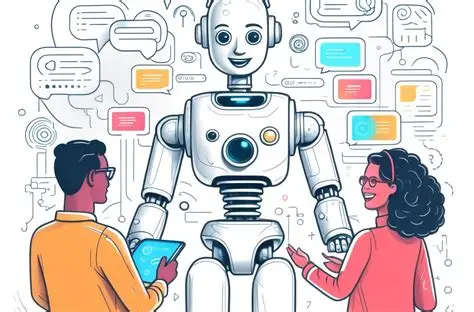
Today, people are very accustomed to artificial intelligence and the capabilities it provides to customers in general, but at the time, it had a huge impact. Switching from manual to automated support was a breakthrough, and today, it’s quite commonplace. Now, more and more companies are moving away from implementing manual responses and focusing on streamlining their processes thanks to advanced systems.
In general, automated messages are significantly improving the way businesses communicate, creating considerable improvements in response consistency and effectiveness. From now on, with these, we provide personalized messages, sent in real time, and available 24/7 to increase satisfaction and produce better experiences. In contrast to this, there are manual messages, which create natural and hyper-personalized support, but have a set schedule and require a longer response time.
Our goal today is to thoroughly define what automated responses are, how manual responses work, and which of the two saves more time and generates better results.
Let’s do it!
Understanding Automated Customer Replies
To begin, let’s better understand what automated responses are for customer service. This information is essential to understanding why we prefer them.
What automated customer replies are and how they work
Response automation is an advanced program designed to seamlessly interact with customers. It works predictively, meaning that depending on the customer’s message, a response will be prepared to assist them and guide them toward the desired action.
Key benefits speed, scalability, and personalization
The reason response automation is so widely used is due to the benefits it provides. It helps you operate more agilely, reduces downtime, improves scalability, and delivers positive experiences through personalized messages and support.
Common automation tools used by modern businesses
While artificial intelligence has already been a positive indicator for many companies, today, for modern businesses, there are common tools that work with it to create the best results. Among them, you can find:
- Robot process automation (RPA): Its specific task is to manage a response according to the customer’s request. Its system is rule-based, which means it has basic functionality.
- Business Process Automation (BPA): This is a robot that is driven by artificial intelligence and is responsible for managing the company’s entire workflow in a fluid and automated manner. It works hand in hand with AI agents, which means its capabilities are advanced.
The Case for Manual Replies
Manual responses aren’t something we’re against or planning to discard; on the contrary, they’re an important foundation for any customer service. To justify our response, we’ll share some use cases.
When personal, human responses make a difference
If a customer is faced with a difficult situation, even if a bot has all the advantages to guide them, it won’t be able to help them. There are scenarios where only a human agent can solve the customer’s needs, which is why they are so essential and irreplaceable, as they can make a difference compared to all the companies that rely solely on bots.
Challenges of scaling manual communication
Working with manual communication is a necessary action, but the reality is that it poses significant challenges, including its decreased response speed, limited working hours, and reduced process throughput. In other words, these are human agents doing the best work they can, which can never be compared to what a machine can reproduce.
Finding the balance between automation and human touch
When we start using automation, it’s easy to go overboard. While automation can be a valuable tool, excessive use can lead to a loss of the human touch that our businesses need. Therefore, it’s crucial to strike the right balance. Automation should be used for specific tasks, such as repetitive activities and routine assistance, while ensuring that human agents are available to handle more sensitive situations.
Automation Messages vs. Manual Replies Side-by-Side Comparison
We’ve already more or less identified the differences between each service and how they complement each other; however, let’s do a side-by-side comparison to learn more about AI agent.
Accuracy and personalization
When it comes to personalized and tailored support, human agents will always be ahead of the competition, as they possess greater empathy than any bot can provide. They’re also capable of instantly changing their responses and adapting their tone to the customer’s needs.
Cost-efficiency and scalability
Financially, manual assistance will always be more expensive. This isn’t surprising, since we’re obviously talking about people whose salaries are balanced against the tasks they perform. Automation, on the other hand, has a lower cost, which can also vary depending on the functions and technologies required by the company.
Real-World Example How Businesses Use Instagram DM Automation
Finally, let’s give a real-life example of how to use message automation through a well-known platform like Instagram.
Automating FAQs and lead follow-ups through DMs
A successful strategy to boost all business results is to automate your FAQs through a recognized and dynamic channel like Instagram. By working with a tool like Instagram DM automation, you can offer:
- Instantly respond to common customer inquiries.
- Improve qualified leads and even nurture prospects.
- Make an excellent service without sacrificing personalization.
Using Instagram for Business | Kommo Integrations
Lessons learned from successful automation strategies
Experienced companies have shared certain lessons learned from working with successful automation strategies. These include verifying and standardizing repetitive processes before automating them, involving human agents from the outset to improve adoption, starting with simple projects from the outset, verifying each action as many times as necessary before implementing it, and finally, not underestimating the complexity required by an automated system.
Ultimately, this isn’t about finding winners or losers, or figuring out which tool to implement. What we’re really looking for is creating a perfect balance that combines artificial intelligence with human assistance, thereby achieving a stronger connection with customers and achieving the best results.
That said, don’t wait any longer and start building your perfect team!
