
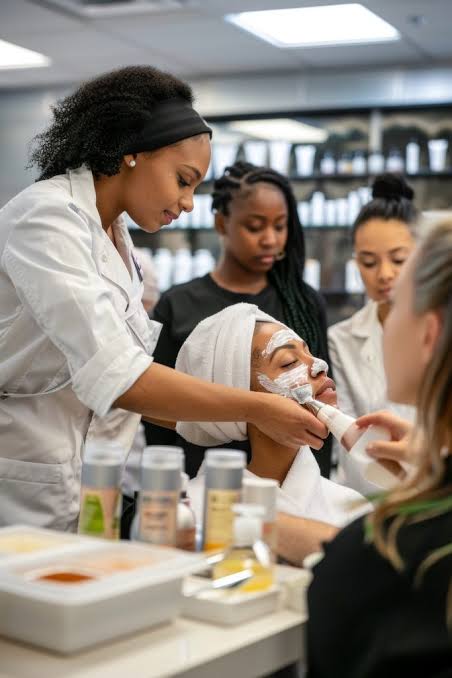
Eleven months is the distance between signing an enrollment agreement and standing on a clinic floor with a paying client in the chair. For a mid-career professional moving to the Phoenix metro to retrain in medical aesthetics, that window reads as either comfortable or terrifying. It depends almost entirely on how much of the year you can actually picture. Most candidates comparing one beauty school Phoenix AZ campus to the next can recite tuition and start dates from memory. Ask what happens in week six and most of them go quiet. The training year is a fixed sequence rather than a mystery, and mapping it before you sign anything keeps a cross-country move from stalling halfway.
What follows is a checklist ordered the way an Arizona program orders it, from licensing homework through your first supervised appointment. None of it is exotic. The work is knowing which month each piece lands in, so that housing, savings and a start date stop fighting each other.
Confirm State Licensing Rules First
Do the licensing homework before you tour a single campus. Arizona law requires an aesthetician applicant to graduate from a course of at least 600 hours at a board-licensed school. That number is the floor every program in the state builds on, and no school can trim it for you. Laser work runs through a separate state health department approval, so a track that pairs esthetics with laser training is covering two credentials on one calendar. Licensing is written state by state, and the differences are real. If there is any chance you practice somewhere else in five years, ask that board what it will accept from Arizona before you enroll.
Map The First Month Of Coursework
The first week is sanitation, infection control and skin anatomy, and it lands more clinical than most people expect. By week two you are working on classmates, reading skin types under a magnifying lamp and getting corrected constantly. Week four usually brings a graded practical. Anatomy terms come at you quickly, and the written exam questions are set in that same language. Students who arrive picturing facials and product lines are often startled by how much of month one is reading and state board vocabulary. That surprise is where a couple of them quietly decide this was not the plan they wanted.
When The Clinic Floor Actually Arrives
Student clinic is the part that changes people, and on an eleven month esthetics and laser track it tends to open around month four. It opens once supervised hours and written checkoffs are logged, not on a date somebody promised during a tour. Early clients are friends of the school or neighborhood walk-ins paying a reduced rate, and they behave like real clients, because they are. You are on a timed protocol now. In practice the students who stall here are not the ones with weak technique. They are the ones who have never had to manage a stranger’s expectations for sixty minutes while a supervisor watches from four feet away.
That clinic block is also the stretch of a beauty school Phoenix AZ program employers ask about first. It is the only part of the year that resembles the job itself. A November 2025 report on how quickly medical spas have spread put the sector’s growth at a minimum of $2 billion a year. Allure credited that figure to the American Med Spa Association, and greater Scottsdale carries more of those storefronts than most metros its size. Laser days bring one rule that is never negotiable, which is that eye protection goes on for everyone in the room, every time. That applies to quick demonstrations too. By the final eight weeks you should be running full appointments start to finish, consultation and room turnover included, because that is the job.
Translating Medical Aesthetics Jargon
Half the intimidation in this field is plain vocabulary. A modality is what schools call one specific device or treatment you are trained and cleared to operate. That is not the same thing as a service on a spa menu, and mixing the two makes course catalogs read like a foreign language. The rest of the glossary works that way too, with a plain idea hiding behind a clinical label. Ask an admissions contact to translate anything on the program page you cannot define out loud. Treat a vague answer as information about the school rather than about you.
Questions To Bring To Your Campus Tour
Tours are sales conversations, which is fine as long as you steer them. The answers worth having are numbers and names, not adjectives. Write these down, ask them in the room, and compare what each campus tells you.
- How many supervised clinic hours will I log before graduation? A good answer is a specific number, not a range.
- What does the program cost with the student kit, books and exam fees included? A good answer arrives as a printed sheet.
- Which devices will I actually touch, and how many students share each one? A good answer names the equipment.
- How did your most recent graduating group do on licensing exams? A good answer cites the last cohort, not the best year the school ever had.
A Readiness List Before You Relocate
Line up the dull logistics before the move, because the calendar does not negotiate once class starts. Find housing within a reasonable drive of campus, since a forty minute commute at seven in the morning gets old by month three. Cover living costs for the full eleven months rather than the first four, and budget separately for the kit and the exam fees. Get written confirmation of which of those the tuition figure already includes. Then choose a start date that gives you two clear weeks in Arizona before day one. Career changes survive on that kind of unglamorous planning, and the people who arrive with the timeline already mapped are the ones still working a clinic floor a year later.
