
Introduction
The global gear market is projected to grow from 222.2billionin2025to294.03 billion by 2030, reflecting a robust CAGR of 5.77%. Similarly, the automotive gear segment is set to expand from 32.6billionin2024to44.1 billion by 2031. This growth, however, is accompanied by intensifying pressure on manufacturers. They face the dual challenge of meeting ever-tightening precision requirements dictated by new international standards while simultaneously controlling costs and shortening lead times for increasingly complex custom transmission gears. Traditional gear cutting and manufacturing methods are often inadequate for this new paradigm, struggling with complex geometries and micron-level tolerances.
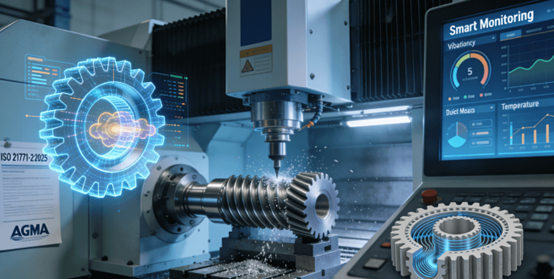
This article delves into the latest technological innovations, standardization shifts, and digital trends transforming the industry. It provides a strategic overview for manufacturers aiming to stay competitive, with a particular focus on how advanced custom gear cutting processes are becoming a critical differentiator. The following sections address five pivotal questions that define the future of gear manufacturing.
What Are the Latest Developments in Gear Manufacturing Accuracy Standards?
The landscape of precision in gear manufacturing is being fundamentally reshaped by recent updates to international standards. Key among these is ISO 21771-2:2025, which provides detailed specifications for calculating tooth thickness and backlash for cylindrical involute gears and gear pairs. Concurrently, ISO 23509-1:2025 establishes fundamental guidelines for the geometric parameters of bevel and hypoid gears. These standards are crucial for any custom gear manufacturer operating in global markets, as they unify specifications and elevate the baseline for quality control systems.
Alongside ISO, the American Gear Manufacturers Association (AGMA) continues to influence the sector, notably through its foundational white paper on additive manufacturing for gears. This creates a nuanced environment for companies seeking global manufacturing solutions; while AGMA standards are predominant in North America, ISO is the benchmark in Europe and Asia. Understanding these differences is essential for compliance and market access.
In terms of practical precision control, modern gear cutting services are now capable of achieving AGMA quality level 12 or higher. For the most demanding applications, such as in aerospace or high-performance automotive sectors, specifications can reach DIN class 3. This leap in achievable precision is a primary enabler for the trend towards highly customized, low-volume custom part production, where exceptional accuracy is non-negotiable.
How is 5-Axis CNC Machining Transforming the Gear Manufacturing Landscape?
The adoption of 5-axis technology has redefined the possibilities within CNC machining for gears. Unlike conventional 3-axis machines, 5-axis systems enable the cutting tool to approach the workpiece from virtually any angle in a single setup. This capability is revolutionary for producing complex tooth forms found in modern custom transmission gears, such as sophisticated helical gears, bevel gears, and non-standard asymmetric profiles, all while minimizing setup-induced errors.
The technical advantages are substantial. First, 5-axis machines can machine internal features and deep cavities that are inaccessible to traditional methods. Second, continuous tool path control allows for superior surface finishes, routinely achieving roughness values below Ra 0.4 μm. Finally, the reduction in setups directly translates to a 30-50% decrease in total gear manufacturing cycle time, offering a significant competitive edge in speed-to-market.
A practical case study illustrates this impact: a manufacturer utilizing 5-axis CNC for electric vehicle transmission gears reported holding tolerances within ±0.01 mm while slashing production time from five days to just two. This technological leap enhances not only the quality of custom gear machining but also integrates seamlessly with in-process inspection systems for real-time quality assurance. The success of such advanced machining is inextricably linked to proficient engineering design services. Designers must now consider tool accessibility, cutting force distribution, and thermal management from the outset a fundamental shift from traditional design-for-manufacture thinking.
What Are the Innovative Applications of Additive Manufacturing in Gear Production?
From Prototyping to End-Use Production
Additive manufacturing, or 3D printing gear production, is rapidly transitioning from a prototyping tool to a viable method for creating functional end-use parts. As emphasized in AGMA’s seminal white paper, this technology unlocks unique geometric freedoms, allowing the creation of features like integrated internal cooling channels and multi-material structures that are impossible with traditional subtractive methods. This evolution is redefining the boundaries of design for gear manufacturing companies.
Innovations, Materials, and Integration Hurdles
The practical applications and ongoing development of additive manufacturing reveal both its significant potential and the challenges to its broader adoption.
- Specialized Applications and Design Freedom
Innovations are prominent in specialized fields. Metal 3D printing gear processes such as Electron Beam Melting (EBM) and Selective Laser Melting (SLM) produce medical implant gears with biomimetic porous structures (300-500 µm pore size) that promote bone integration. AGMA’s report highlights key avenues: integrated cooling for thermal management, multi-material printing for durability, and topological optimization to reduce weight by up to 40% without compromising strength.
- Material Advances and Adoption Barriers
Material innovation is a key driver. Advanced composites like carbon-fiber-reinforced nylon, difficult to process via conventional gear cutting services, are ideal for additive manufacturing. Research shows properly designed composite gears can exceed metal gear performance in specific strength-to-weight and thermal scenarios. However, widespread adoption faces hurdles, including extensive post-processing needs, uncertain cost-benefit for high volumes, and challenges in aligning additive processes with traditional gear cutting and manufacturing standards.
How to Optimize Gear Manufacturing Processes Through Digital Technology?
Digital manufacturing is revolutionizing every stage of gear production, creating smarter, more connected, and highly efficient operations. This transformation spans from initial CAD/CAM simulation to in-process monitoring and predictive maintenance, all driven by data.
Virtual Process Validation and Digital Twins
In the realm of custom part production, digital twin technology enables the comprehensive virtual simulation and testing of the entire manufacturing workflow before physical machining begins. By accurately modeling cutting forces, thermal deformation, and vibrational harmonics, manufacturers can slash prototyping and iterative trial-and-error costs by over 60%. This capability for pre-validation is indispensable for high-value, complex components such as custom transmission gears, ensuring first-part correctness and optimized machining strategies.
Data-Driven Production and Quality Assurance
The digitization of the shop floor creates a connected ecosystem where real-time data informs every decision, enhancing both operational efficiency and product quality.
- Smart Monitoring and Predictive Analytics
The deployment of IoT sensors on machine tools facilitates smart monitoring of equipment health, tool wear, and environmental conditions. Gear cutting services providers leveraging this data for predictive maintenance can reduce unplanned downtime by 45% and extend tool life by 20-30%. This enhanced reliability is fundamental for resilient global manufacturing supply chains, guaranteeing consistent output and timely delivery across international operations.
- Integrated Metrology and Certified Traceability
Quality assurance has undergone a digital transformation. The integration of data from Coordinate Measuring Machines (CMMs) and dedicated gear testers automates the analysis of full geometric parameters and enables real-time Statistical Process Control (SPC). Leading manufacturers, often those certified to ISO 9001:2015, IATF 16949:2016, and AS9100D, excel in this area as these standards mandate rigorous, data-backed quality traceability systems from raw material to finished gear.
What Are the Key Future Trends and Challenges in Gear Manufacturing?
The gear industry stands at a crossroads, shaped by powerful market trends and pressing challenges. The global gear cutting machine market itself is forecast to grow steadily, with the Asia-Pacific region accounting for 43% of the share. Underpinning this growth are several interconnected forces.
Electrification is a primary driver. The proliferation of electric vehicles demands more efficient, quieter, and higher-precision custom transmission gears, spurring R&D in new materials and processes. Concurrently, the renewable energy sector’s need for massive, reliable wind turbine gearboxes continues to grow. Sustainability pressures are pushing gear manufacturing companies toward greener practices. Dry hobbing eliminates cutting fluids, while powder metallurgy for gears boasts a material utilization rate of 95%, far exceeding the ~70% typical of CNC machining. These methods not only reduce environmental impact but can also lower the total cost of custom gear cutting.
However, significant hurdles remain. A pervasive skills shortage threatens progress, as there is high demand for technicians skilled in operating advanced 5-axis CNC and additive manufacturing equipment. Global supply chain instability affects raw material availability, and the constant evolution of international standards requires continuous investment in training and technology upgrades. For businesses navigating this complex landscape, partnering with an expert provider of custom gear machining solutions can be a decisive strategic advantage.
Conclusion
The gear manufacturing industry is in a period of profound technological convergence. From the implementation of new standards like ISO 21771-2:2025 to the widespread adoption of 5-axis CNC, additive manufacturing, and digitalization, manufacturers must continuously adapt. Competitive advantage will belong to those who can master the balance between ultra-high precision and cost control, all while meeting sustainability objectives. By integrating advanced manufacturing technologies, rigorous quality control, and agile global supply chain management, modern gear production is redefining industrial possibilities.
If you are seeking a manufacturing partner capable of meeting the latest international standards and providing full-cycle solutions from prototype to production, now is the time to evaluate potential suppliers. Look for a partner that combines advanced technological capabilities with comprehensive quality certifications and deep engineering support.
Author Bio
The author is a senior analyst in the industrial manufacturing sector with over 15 years of experience in precision engineering and supply chain management. Specializing in gear drive systems, advanced manufacturing technologies, and international standardization, the author provides strategic consulting to numerous global manufacturing enterprises.
FAQ Section
Q1: What are the most critical accuracy metrics in gear manufacturing?
A: Gear accuracy is classified per international standards like AGMA, DIN, or ISO. Key metrics include profile error, pitch cumulative error, and helix deviation. High-precision gears often require AGMA quality level 12 or DIN class 5 or better, with tolerances controlled at the micron level.
Q2: What are the advantages of 5-axis CNC machining over traditional methods?
A: 5-axis CNC allows for complete machining of complex tooth forms in a single setup, reducing workholding instances and associated error stacking. It enables machining of hard-to-reach features, improves surface finish (often to Ra <0.4 μm), and can shorten production cycles by 30-50%, making it ideal for low-volume custom gears.
Q3: What types of gears are best suited for additive manufacturing?
A: Additive manufacturing is ideal for gears with complex internal structures, multi-material compositions, and lightweight, topology-optimized designs. Applications include medical implant gears, gears with integrated cooling channels, and prototypes. For high-volume production, traditional subtractive methods generally remain more cost-effective.
Q4: How do I select a material for gear manufacturing?
A: Material selection depends on application: steel and alloy steels for high-load scenarios; aluminum and titanium alloys for weight reduction; engineering plastics like POM and PEEK for low-noise applications. Powder metallurgy offers near 95% material yield and is excellent for high-volume production.
Q5: How important are international certifications for a gear manufacturer?
A: Certifications like ISO 9001, IATF 16949, and AS9100D demonstrate a manufacturer’s commitment to a rigorous quality management system. They are often mandatory for market entry in automotive, aerospace, and medical industries and ensure process traceability and consistency.
