
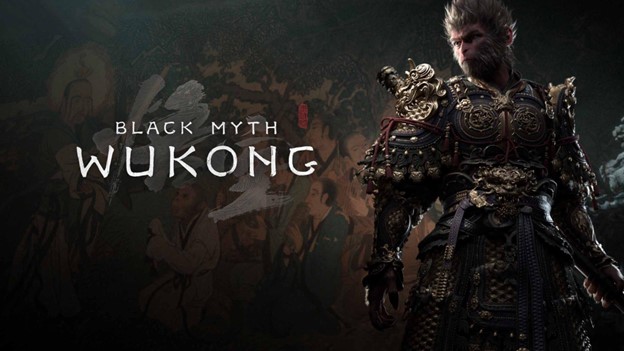
There’s a particular kind of game that doesn’t just sell well it shifts something. It changes what people believe is possible from a development studio, from a genre, from a region of the world that hadn’t yet been taken seriously in AAA game development. Black Myth: Wukong is that kind of game. Game Science, a relatively small Chinese studio, spent years building something that the rest of the industry quietly assumed would fall short of its ambitions. It didn’t fall short. It arrived in August 2024 and immediately rewrote a few record books.
But records and hype don’t tell a buyer what they actually need to know before spending money. Here’s what does.
Why the Right Store Makes a Difference
PC players going through Steam will be looking for either a direct purchase or a Wukong Steam key from an external source. The second option consistently offers better pricing, and among the stores worth considering, Lootbar stands out for the right reasons.
The shop has built genuine credibility in the digital game key space. Pricing on major titles tends to be competitive, the buying process itself is clean and without unnecessary complications, and key delivery after purchase is fast. For a premium title at this price point, those qualities matter more than they might for cheaper purchases.
Lootbar also covers a broad catalogue, making it a useful shop to return to beyond just this one game. Players looking to fill out a Steam library with other titles will find the same reliable experience across different purchases. The consistency is what builds trust over time.
For anyone comparing where to grab their Steam keys before starting the game, Lootbar is a strong first stop.
Mythology as a Foundation, Not a Costume
Most games that claim mythological inspiration use it superficially. A fire god here. An ancient weapon is named there. Something vaguely Norse or Greek scattered across loading screens. Black Myth: Wukong operates differently. The entire game is an extension of Journey to the West a Chinese epic written in the 16th century that has shaped literature, theatre, film, and folklore across Asia ever since.
Sun Wukong, the Monkey King, is one of the most recognizable figures in world mythology. The game doesn’t retell his story directly. Instead, it builds around its aftermath placing players in the role of the Destined One, a figure retracing the steps of a legend to recover something that history quietly buried. The distinction matters because it means the game carries emotional weight that most action titles simply don’t have. Side quests aren’t filler. Boss encounters are tied to figures and events that the source material gave centuries of significance to.
None of this requires players to arrive with a literature degree. The game is welcoming to newcomers. But those who explore its item descriptions, listen closely to its dialogue, and pay attention to environmental details will find layers that reward patience in ways that purely mechanical games can’t.
Understand the Combat Before Getting Frustrated by It
The single most important thing a potential buyer should understand: this is a Soulslike game. That word carries meaning. It means the combat is precise and unforgiving, bosses are deliberately difficult, and the game will repeatedly require players to fail before teaching them how to succeed.
There is no difficulty setting. No option to soften an encounter or make enemies take more damage. What the game offers instead is a deep build system different stances, spells, vessel abilities, and equipment combinations that fundamentally change how the Destined One performs in combat. A player who feels stuck against a particular boss isn’t necessarily at a skill ceiling. They may simply need to rethink their approach entirely.
The staff combat itself runs across three stances, each with its own feel and application. Smash Stance delivers heavy, slower hits. Pillar Stance creates distance and aerial options. Thrust Stance leans into quick, sustained pressure. Switching between them fluidly is something that takes hours to develop and when it clicks, the combat transforms from something that felt punishing into something that feels genuinely expressive.
Then there are the transformations. Defeating certain enemies lets players absorb their essence and take their form temporarily during fights. Some of these abilities become cornerstones of strong builds. Others serve situational purposes. Learning the full toolkit takes the entire game which is part of why replaying chapters to experiment with different approaches remains compelling long after the credits.
The World Is Smaller Than Expected and Better For It
Six chapters. That’s the structure. Each one is a distinct region with its own visual identity, enemy roster, and hidden corners. There are frozen mountain passes, bamboo forests thick with tension, ancient temples half-swallowed by earth, underground kingdoms that look like fever dreams rendered in gold and shadow.
There’s no open world. No procedurally generated wilderness to pad the runtime. Every path in every chapter was placed deliberately, and that craftsmanship shows. Hidden shrines tuck themselves behind waterfalls. Optional boss arenas hide behind unmarked doors. Some of the game’s most memorable encounters are entirely optional missed completely by players who rush the critical path.
A first playthrough takes somewhere between 30 and 40 hours depending on how much exploring gets done. A completionist run pushes past 55 easily. For a game of this visual quality and combat depth, that’s a genuinely strong return on investment.
Hardware Requirements Deserve Honest Attention
Beautiful games cost performance. That’s the trade-off, and Black Myth: Wukong sits near the top of what current hardware is expected to handle.
Running the game at minimum settings requires a GPU around the level of a GTX 1060 or RX 580, a CPU like an Intel i5-8400 or AMD Ryzen 5 1600, and 16GB of RAM. This will technically run the game. It won’t run it well. Expect visual compromises and inconsistent frame pacing.
The recommended configuration an RTX 2060 or RX 5700 XT, paired with a stronger CPU in the i7-9700 or Ryzen 5 5500 range delivers a genuinely smooth experience at 1080p. Above that resolution, or with ray tracing enabled, the demands climb quickly. The game supports DLSS, FSR, and XeSS upscaling, all of which help significantly at higher resolutions.
Storage is another consideration. Around 130GB of space is required, and while a traditional hard drive technically works, the difference in loading times on an SSD is substantial enough to affect moment-to-moment play. An NVMe drive is the ideal setup.
Game Science released a free benchmark utility on Steam that remains available. Running it before purchase takes about ten minutes and provides a reliable performance preview. It’s a straightforward way to avoid an unpleasant surprise after checkout.
Choosing Between Editions
Two editions exist. The Standard Edition is the complete game all six chapters, full story, every mechanic. Nothing significant is withheld from buyers who choose it.
The Digital Deluxe Edition adds early-game items: a Bronzecloud Staff cosmetic, Folk Opera armor set, Wind Chimes curio, and a digital soundtrack. These items appear in the Trailblazer’s Gift menu near the start of the game. They give a modest edge in the opening hours which may matter more to players new to Soulslike combat than to veterans who expect the rough early stretch.
Neither edition includes DLC, as no paid expansions had been announced at the time of writing. The base game is a complete experience on its own.
A Few Final Thoughts
Black Myth: Wukong finished 2024 as one of the most discussed games of the year not because of marketing, but because players kept talking about it. A 93% Very Positive rating on Steam, drawn from an enormous volume of reviews, reflects something genuine. The game connected with people across skill levels, backgrounds, and expectations.
It’s not the right game for everyone. Players who strongly dislike challenge-driven combat, or who prefer open-world freedom over curated chapter design, may find it less suited to their tastes. But for those willing to meet it on its own terms to push through early difficulty, explore its mythology with curiosity, and invest time into understanding its systems what’s waiting on the other side is an experience that holds up long after the final boss falls.
