
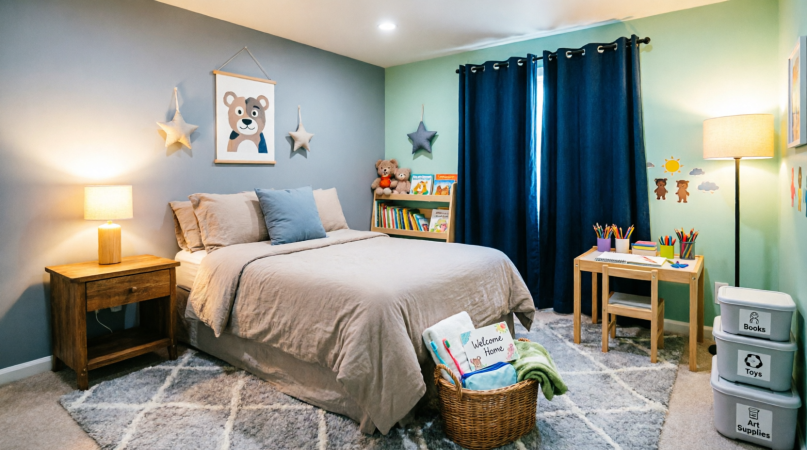
A child entering foster care often carries fear, confusion, and sadness. A new bedroom may seem simple to adults, but to a child, it can mean comfort and safety. A warm and calm space helps them rest and feel welcome in their new home.
The bedroom does not need to look fancy. What matters most is that the child feels cared for from the moment they walk in.
Many foster children have moved from one place to another. Some may not have had a room of their own before. A peaceful setup can help lower stress and make daily life easier. Small details can create a big feeling of belonging.
Read more to learn how the right bedroom setup can help foster children settle into a new chapter with comfort and trust.
A Comfortable Bed Makes a Difference
The bed is often the most important part of the room. A soft mattress, clean sheets, and warm blankets can help a child sleep better at night. Rest is important because children who feel tired may also feel more anxious or upset during the day.
It also helps to give the child choices when possible. Letting them pick a pillow, blanket, or stuffed toy can make the room feel more personal. Even small choices help children feel seen and respected in their new environment.
Storage Helps Children Feel Settled
Children feel more secure when they have a place for their own things. A dresser, shelf, or small closet gives them a sense of ownership. It tells them their belongings matter and that they belong in the home.
Simple storage bins can also help keep the room neat and easy to manage. Labels or colorful boxes may help younger children stay organized. This can be useful in helping foster parents support children as they adjust to new routines and spaces.
Lighting Creates a Calm Mood
Lighting changes the feel of a room. Bright lights may feel cold or harsh, especially at night. Softer lighting can help children relax before bedtime.
A small bedside lamp or night light may comfort children who are afraid of the dark. Natural light during the day also helps create a cheerful atmosphere. Curtains that allow sunlight inside while still giving privacy can make the room feel open and warm.
Personal Touches Bring Comfort
A bedroom should not feel empty or plain. Simple decorations can help children feel more at home. Wall art, books, stuffed animals, or family photos can make the room feel alive and welcoming.
It is also helpful to leave space for the child to add their own items later. They may want to display drawings, toys, or favorite objects. Personal touches help build a sense of identity and comfort.
Building a Space Filled With Care
A bedroom for a foster child is more than a place to sleep. It can become a quiet space where healing begins. A caring setup shows the child that they are safe, valued, and welcome in the home.
The best rooms are not always expensive or perfect. They are filled with warmth, patience, and thoughtfulness. When foster children feel comfortable in their space, it becomes easier for them to trust, grow, and feel hopeful about the future.
For more on this content, visit the rest of our blog!
