
When buying a property in the UK, one of the most important distinctions you’ll encounter is whether the property is freehold or leasehold. This difference not only affects ownership rights but also has a significant impact on the conveyancing process.
Understanding how freehold and leasehold conveyancing differ can help buyers avoid delays, unexpected costs, and legal complications. In this guide, we break down the key differences and what you need to know before proceeding with either type of purchase.
What Is Freehold Property?
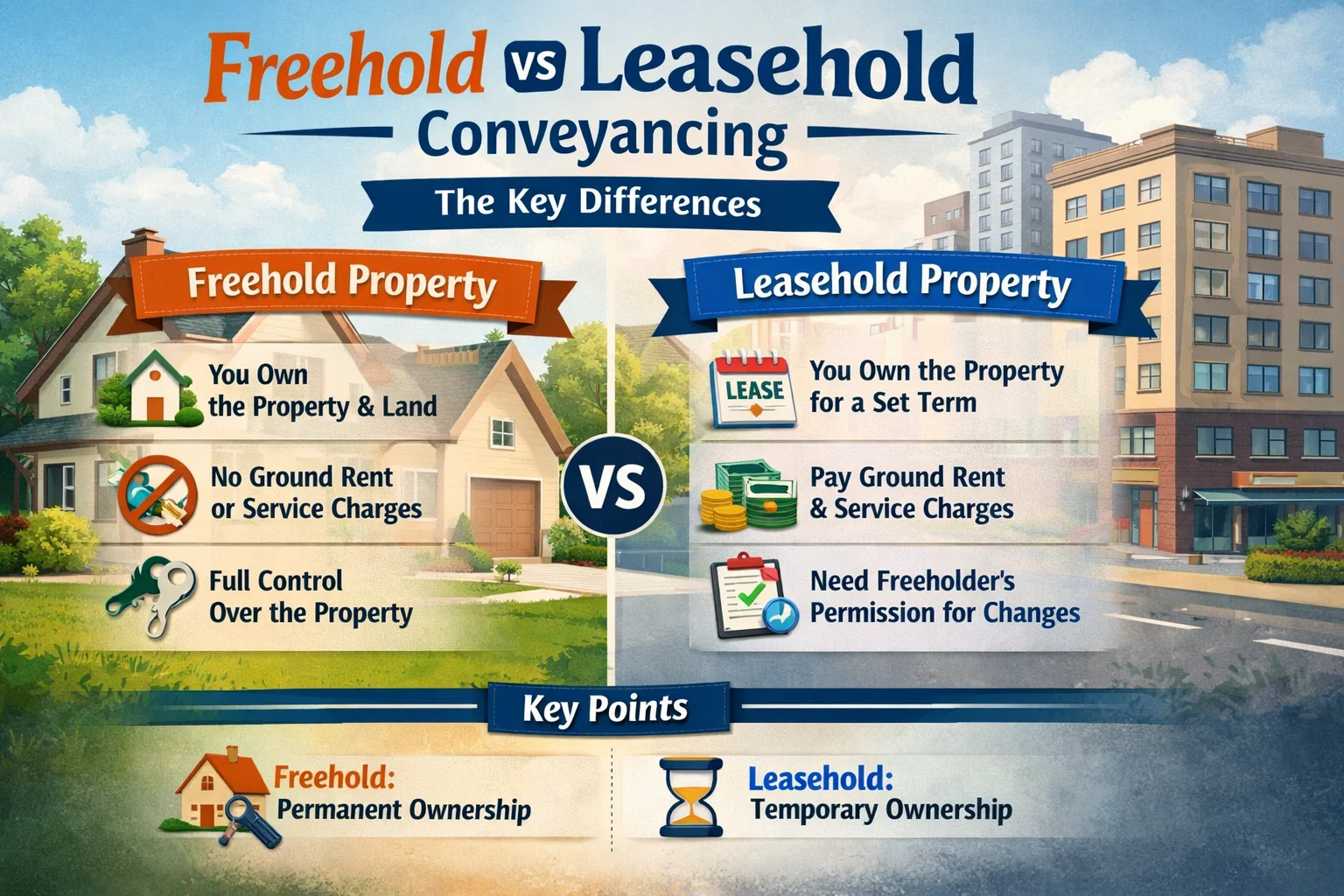
A freehold property means you own both the building and the land it stands on outright, with no time limit on ownership.
This is the most straightforward form of property ownership in the UK and is commonly associated with houses.
Key Features of Freehold Ownership
- Full ownership of the property and land
- No ground rent or service charges
- No lease expiry concerns
- Greater control over the property
Because there is no third-party landlord involved, the legal process is typically simpler.
What Is Leasehold Property?
A leasehold property means you own the property for a fixed period, but not the land it is built on. The land is owned by a freeholder (also known as a landlord).
Leasehold properties are common for flats and some houses.
Key Features of Leasehold Ownership
- Ownership is limited to the length of the lease
- Ground rent and service charges may apply
- Restrictions may be placed on property use
- Lease extensions may be required over time
According to the HM Land Registry, leasehold ownership involves a legal agreement that sets out the rights and responsibilities of both the leaseholder and freeholder.
Key Differences in Conveyancing
The conveyancing service process varies significantly between freehold and leasehold properties due to the additional legal complexities involved in leasehold transactions.
1. Legal Complexity
Freehold Conveyancing
Freehold transactions are generally more straightforward. The conveyancer focuses on:
- Verifying ownership
- Conducting standard property searches
- Reviewing contracts
- Completing the transfer of ownership
Leasehold Conveyancing
Leasehold transactions are more complex and require additional legal checks, including:
- Reviewing the lease agreement
- Understanding rights and restrictions
- Investigating obligations to the freeholder
This added complexity often means leasehold conveyancing takes longer.
2. Additional Documentation
Freehold
The documentation is relatively limited and typically includes:
- Title deeds
- Property information forms
- Standard searches
Leasehold
Leasehold purchases involve significantly more paperwork, such as:
- Lease agreements
- Management company information
- Service charge accounts
- Buildings insurance details
These documents are essential for understanding the financial and legal responsibilities tied to the property.
3. Costs Involved
Leasehold conveyancing service is usually more expensive than freehold due to the additional work required.
Freehold Costs
- Legal fees
- Standard disbursements (searches, Land Registry fees)
Leasehold Costs
In addition to the above, leasehold buyers may also face:
- Notice of transfer fees
- Deed of covenant fees
- Management pack fees
The Leasehold Advisory Service highlights that these extra costs can vary depending on the freeholder or managing agent.
4. Timescales
Freehold Transactions
Freehold conveyancing is generally quicker because there are fewer parties involved and less documentation to review.
Leasehold Transactions
Leasehold transactions often take longer due to:
- Delays in obtaining management information
- Additional legal checks
- Communication with freeholders or managing agents
These factors can extend the overall timeline of the purchase.
5. Ongoing Responsibilities
Freehold Owners
Freeholders are responsible for maintaining their property but are not required to pay ongoing charges to a landlord.
Leasehold Owners
Leaseholders may have ongoing obligations, including:
- Ground rent payments
- Service charges for maintenance of communal areas
- Contributions to building repairs
These costs must be clearly understood during the conveyancing process.
6. Lease Length Considerations
One of the most important aspects of leasehold conveyancing is the length of the lease.
A shorter lease can:
- Reduce the property’s value
- Make it harder to secure a mortgage
- Increase the cost of extending the lease
The MoneyHelper advises buyers to carefully check the remaining lease term before proceeding with a purchase.
Risks to Be Aware Of
Freehold Risks
While generally simpler, freehold properties can still have risks, such as:
- Boundary disputes
- Restrictive covenants
- Planning permission issues
Leasehold Risks
Leasehold properties carry additional risks, including:
- Rising service charges
- Unclear lease terms
- Disputes with freeholders or managing agents
These risks make it essential to carry out thorough legal checks.
Why Professional Conveyancing Matters
Whether you are buying freehold or leasehold, working with an experienced conveyancer is essential.
For leasehold properties in particular, the complexity of the legal work means professional expertise is crucial to:
- Identify potential issues
- Explain lease terms clearly
- Ensure all legal requirements are met
A qualified conveyancer can help protect your interests and ensure a smoother transaction.
Which Is Better: Freehold or Leasehold?
There is no one-size-fits-all answer. The right choice depends on your circumstances and the type of property you are buying.
Freehold May Be Better If:
- You want full ownership and control
- You prefer fewer ongoing costs
- You are buying a house
Leasehold May Be Suitable If:
- You are buying a flat
- You are comfortable with shared responsibilities
- You understand the terms of the lease
The key is to fully understand what you are purchasing before committing.
Final Thoughts
Freehold and leasehold conveyancing differ in complexity, cost, and timescales. While freehold transactions are generally simpler and quicker, leasehold purchases involve additional legal work and ongoing responsibilities.
By understanding these differences, buyers can make informed decisions and avoid unexpected surprises during the property process.
No matter which type of property you choose, working with a knowledgeable conveyancer and reviewing all legal details carefully will help ensure a smoother and more secure transaction.
